

We may earn a commission when you buy through links on this page, at no extra cost to you. Learn more.
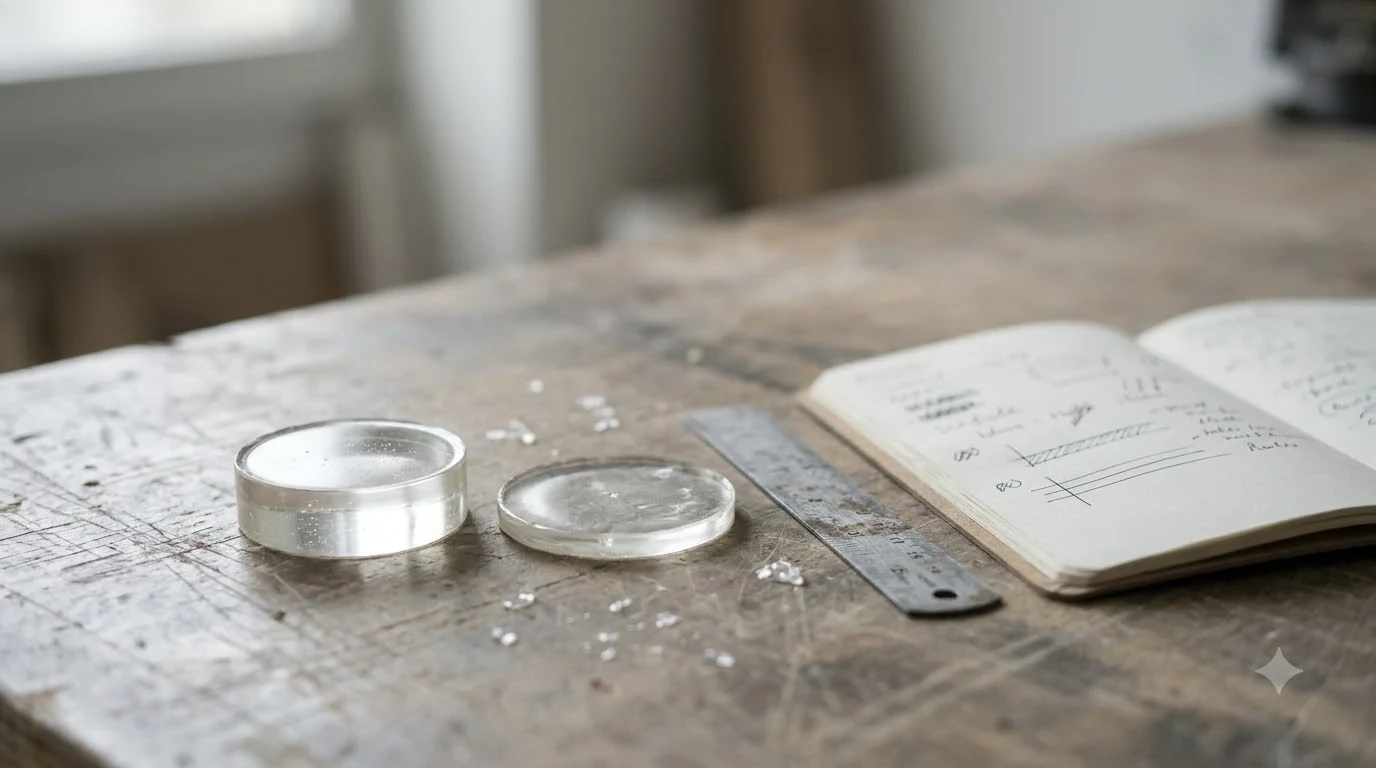
Casting resin vs epoxy is mostly a question of which epoxy fits your pour, because casting resin is a type of epoxy formulated for deep pours. Casting resin is typically poured several inches per layer, while epoxy coating or art resin is usually limited to 1/8 to 1/4 inch per application. Casting resin is typically dry to the touch within 72 hours and can take up to a week to cure fully, so timing matters as much as thickness.
If you are choosing between them for a river table, a mold, a figurine or a countertop, the answer depends on three things: pour depth, cure behavior and the job the finished piece must do. This guide walks through those differences using manufacturer and reference material so you can match the resin to your project.
What Casting Resin and Epoxy Actually Mean
Casting resin and epoxy are not two unrelated materials. Epoxy is a two-part system of resin and hardener that reacts into a solid, and casting resin is one formulation within that family. Coating resin, sometimes called laminating resin, is also an epoxy, built for surfaces that see regular use.
Viscosity is the main practical difference. Casting resin is very thin, which lets bubbles rise to the surface and pop, according to ArtResin. Coating and art resins are thicker, which gives you more control on a flat surface but can trap bubbles if poured too deep. Carved uses a water-versus-honey comparison to make the same point.
Because casting resin is thin, it can run off the edges of a project. ArtResin suggests pouring it into a mold or building a frame to hold it in place. Epoxy coating resin is designed to stay where you spread it on a flat surface.
Art Resin vs Casting Resin
Art resin is a high-quality coating resin made for artists and crafters, while casting resin is the thin, deep-pour option for embedding objects and making molds. The two overlap in clear craft work, but their pour limits are very different. Knowing that gap before you mix saves a lot of wasted material.
The biggest practical difference is depth. Art resin is usually poured in layers of 1/8 to 1/4 inch, so a thick piece means many thin pours and possible lines between layers. Casting resin can go several inches in one pour, which suits a block with an object sealed inside.
Mixing ratios also differ. Most art resins use a simple 1:1 ratio, meaning equal parts resin and hardener. Most casting resins use 2:1 or 3:1. Measure exactly as the product instructions state, because incorrect measuring means the resin will not cure correctly.
Art Resin vs Epoxy
Art resin is one kind of epoxy, so the real question is whether a dedicated art formula or a general epoxy suits your work. Art resins are marketed for artwork, trays, coasters and wall art. Epoxy in the broader sense covers coatings, adhesives and industrial uses as well.
Quality art resins are often described as low odor and solvent-free, and high-quality versions contain light stabilizers to help slow yellowing from UV exposure. These are product claims, so check the label and technical data sheet for the exact formula you buy. Wikipedia notes that epoxy resin is used as a thermoset for adhesives and composites.
Flexibility is another point. ArtResin says art resin is somewhat more flexible than coating resin, since it is meant for pieces that are hung and rarely handled. Carved says epoxy can vary in flexibility depending on its formulation, so read the data sheet rather than assuming.
Casting Resin vs Coating Resin
Coating resin is the tougher option for tabletops, bars and floors, while casting resin is for thick, clear objects and molds. Both are epoxies, but they are designed for different loads and different thicknesses. Picking the wrong one usually shows up as cracks, yellowing or bubbles.
Coating resins are generally formulated to be hard and scratch-resistant. ArtResin notes they are used for high-traffic surfaces such as floors and countertops, and some are sold as food-safe for countertops, table tops and bar tops. Food-safe resins are not considered food safe until they are fully cured, so wait out the full cure time.
Casting resin is harder and more rigid once cured, according to Carved, which makes it a good fit for jewelry and mold casting. It is less resistant to UV light and may yellow over time compared with epoxy. For a countertop in a sunny kitchen, that difference matters more than hardness alone. Background on this topic is covered in Resin Casting for Beginners.
Pour Depth, Curing, and Heat Differences
Pour depth and cure time are where casting resin and epoxy diverge most, and both affect heat. Thick pours hold more heat, so the wrong resin in the wrong depth can overheat. Check the manufacturer’s sheet for your exact product before you pour.
| Factor | Casting resin | Epoxy coating or art resin |
|---|---|---|
| Max pour per layer | Several inches, per ArtResin | 1/8 to 1/4 inch |
| Typical mixing ratio | 2:1 or 3:1 | 1:1 for most art resins, 2:1 for some coatings |
| Dry to the touch | Within 72 hours | Within 24 hours |
| Full cure | Up to 7 days, per ArtResin and Carved | About 72 hours per ArtResin; Hirosart gives 12 to 24 hours, so check your sheet |
| Gel time | Up to 18 hours, per Hirosart | As little as 20 minutes, per Hirosart |
| Upper heat limit | Check the data sheet | Not above 130 degrees Fahrenheit, per Carved |
Heat behaves differently in each type. Hirosart says casting resins distribute exotherm more slowly because they allow thicker pours. Coating epoxy left in a mixing cup for more than 5 to 10 minutes can react faster and produce excessive heat, so pour out and spread promptly.
Pouring coating resin too thick can trap bubbles, overheat, turn yellow or crack. ArtResin’s casting vs epoxy guide advises following the manufacturer’s depth limit rather than pushing it. If your project needs more depth than a coating allows, switch to a casting formula instead of forcing a thick coating pour.
Tip: Pour mixed resin into several smaller containers if the batch is large. Hirosart and ArtResin both note that a mixed volume left in one cup can heat up and cure fast.
Choosing the Right Resin for Your Project
Start with the depth and the job. Casting resin fits deep molds, embedding and small detailed objects, while epoxy coating fits thin layers over flat surfaces. For a broader look at how epoxy compares with other families, see our guide to epoxy vs polyurethane.
Carved’s resin comparison says epoxy is generally used for thin layers, usually no more than 1/4 inch thick, over smooth, flat surfaces such as tables, bars and counters. A river table is often a wide, flat pour that can be deeper than a coating allows, so many makers build it in stages or use a deep-pour casting formula. Read the depth limit on your product before you commit.
Estimate volume before you buy. Carved suggests multiplying length, width and height in inches, then dividing by 1.805 to get U.S. fluid ounces. Buying a little extra helps with mixing waste. If you are weighing clear, UV-resistant options, UV resin vs epoxy resin covers a different cure method.
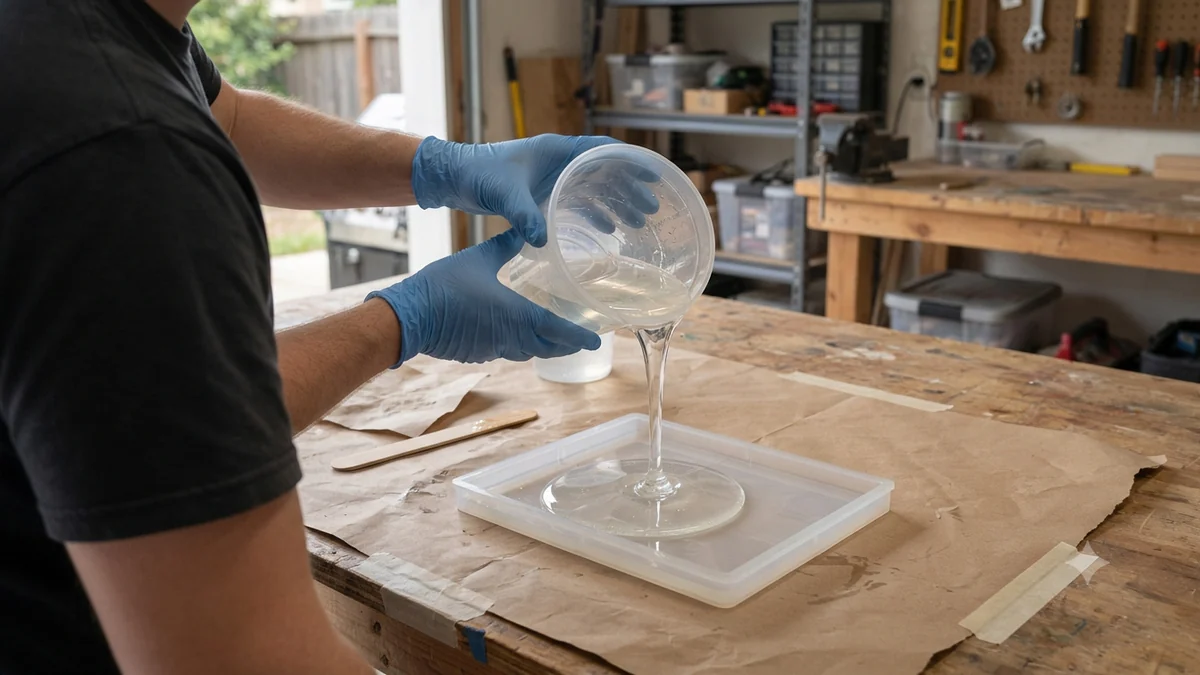
Safety: Wear nitrile gloves, work in a ventilated space and read the product’s safety data sheet before mixing. Carved notes that casting and epoxy resins should not be mixed together, since their curing times and properties differ.
Frequently Asked Questions
Can you mix casting resin and epoxy resin together?
Carved says no, because the two have different curing times and properties that can produce inconsistent results. Use each one for its intended purpose. Carved also notes both types can typically be stored for 1 to 2 years in a cool, dry, sealed place away from direct sunlight.
Can you use epoxy resin for casting molds?
Epoxy is used in casting, but epoxy coating resins are limited to thin pours, so deep molds usually call for casting resin. Carved describes casting resin as the better choice for filling molds and detailed objects. Check the depth limit on any product before you pour a mold.
Does casting resin yellow faster than epoxy resin in sunlight?
Carved says casting resin is less resistant to UV light and may become yellow over time compared with epoxy. Many high-quality art resins add light stabilizers to slow yellowing. Keep cured pieces out of direct sunlight, and check the product label for UV protection.
What mixing ratio do casting resin and epoxy resin use?
Most art resins use a 1:1 ratio, most casting resins use 2:1 or 3:1, and some coating resins use 2:1. Mixing ratios vary by brand, so follow the label exactly. Wrong ratios prevent the resin from curing correctly.
Casting resin and epoxy overlap more than their names suggest, so match the formula to your pour depth, cure time and use. For a broader foundation on resin types and terms, visit Resin Basics & Q&A before you mix your first batch.
More in Resin Basics & Q&A
 What Is Vacuum Degassing for Epoxy Resin and How It Removes Trapped BubblesUpdated Nov 26, 2026
 Epoxy Full Cure Time: How Long Before Your Project Is Ready to UseUpdated Nov 26, 2026
 Envirotex Lite Pour On Instructions for a Glossy, Bubble-Free FinishUpdated Nov 26, 2026
 Deep Pour vs Table Top Epoxy: Which Fits Your Project Depth and Cure TimeUpdated Nov 26, 2026
 High Temperature Epoxy for Metal: How to Pick One That Holds Up to HeatUpdated Nov 26, 2026
 Amazing Clear Cast Resin Instructions: Mix, Pour and Cure Without BubblesUpdated Nov 26, 2026