

We may earn a commission when you buy through links on this page, at no extra cost to you. Learn more.
Yes, does epoxy stick to aluminum, but only when the metal is prepared properly and the epoxy goes on soon after. According to Wessex Resins, the goal is to get the metal back to bright metal, which means clean, bare and evenly scuffed. Their technical expert describes a degrease, abrade and degrease again routine, with epoxy applied within about four hours of abrading. Without that prep, aluminum can peel away from the coating within days.
Aluminum is one of the most common metals people want to coat or repair with epoxy, from boat fittings to shop fixtures to small household parts. The bond is not automatic, though. The steps below explain why bare aluminum resists adhesion, how to prep it, which epoxy types suit metal, and what to do when a coating starts to lift.
Why Epoxy Struggles to Bond to Aluminum
Epoxy grips aluminum by contacting bare metal, and that surface is rarely as clean as it looks. Oils from handling, manufacturing residue and dust can sit between the epoxy and the metal. Aluminum also reacts quickly with air, so a thin oxide layer returns soon after you expose fresh metal.
Gluegun.com notes that this oxide layer is invisible to the naked eye and may not bond well to the aluminum underneath. When it separates from the metal, the failure looks like an adhesive problem even though the real weak point is the oxide. Wiping with solvent alone is usually not enough, because the oxide is still there after the solvent dries.
Types of Aluminum and Their Surface Finishes
Most aluminum you will encounter is either bare, painted, anodized or coated with a factory finish, and each needs a different starting point. Bare aluminum is the easiest case once it is cleaned and scuffed. Painted or coated pieces need the existing finish removed before epoxy can reach the metal.
Epoxy King says that aluminum forms an oxide layer almost right after exposure to air, so sanded metal can start to change within hours. Their guidance is to plan your timing around that fact rather than treat prep as a one-time task. Stainless steel, which is often confused with aluminum in the shop, is generally harder to bond than mild steel because of its smooth factory finish and corrosion resistance.
| Surface condition | What to do first | Why it matters |
|---|---|---|
| Bare, clean aluminum | Degrease, then abrade | Removes contaminants and creates tooth for the epoxy |
| Painted or coated aluminum | Remove the finish down to bright metal | Epoxy cannot bond well to paint that is lifting or loose |
| Anodized aluminum | Check the manufacturer’s data sheet and test a small area | The anodized layer is a manufactured oxide that may need abrasion first |
| Oily or greasy metal | Degrease before any sanding | Sanding can smear oil into the surface |
Preparing Aluminum Before Applying Epoxy
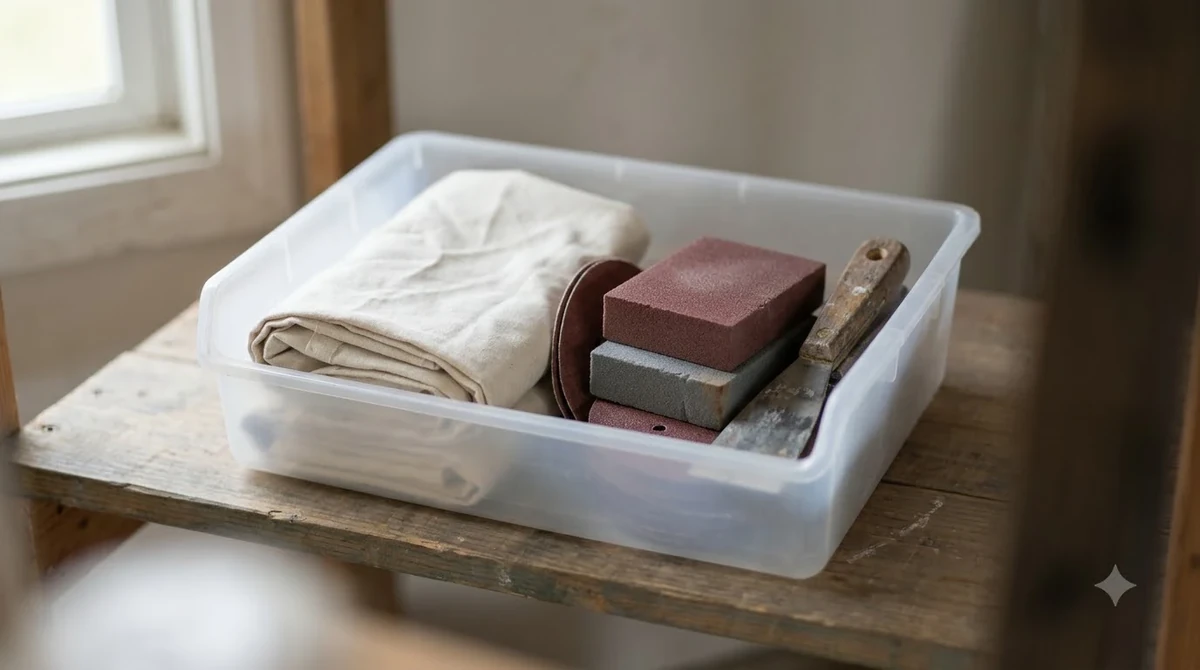
Good prep is a short sequence: clean, abrade, clean again, then coat. WEST SYSTEM advises wiping contaminated surfaces with lacquer thinner, acetone or another suitable solvent, using plain white paper towels, and wiping off the solvent before it dries. The company also says to clean before sanding so you do not grind the contaminant into the metal.
For sanding, WEST SYSTEM says 80-grit aluminum oxide paper gives a good texture for epoxy to key into, and it recommends avoiding sandpaper treated with zinc stearate. Epoxy King also recommends 80-grit sandpaper for most metal work and says to sand until you see consistent bright metal across the whole surface. Sand evenly, not just in spots, so the bond area is uniform.
Once the surface is sanded, remove the dust without touching the metal with bare hands. WEST SYSTEM advises vacuuming, sweeping with a clean brush or washing with water, and it warns against compressed air because it can add oil or water from the compressor. Its surface preparation instructions describe these dust removal methods in more detail. Then degrease again before coating.
- Degrease. Wipe the aluminum with solvent using clean white paper towels, and wipe off the solvent while it is still wet.
- Abrade. Sand with 80-grit aluminum oxide paper until the surface looks evenly bright.
- Remove dust. Vacuum, brush with a clean bench brush or rinse with water. Skip compressed air.
- Degrease again. Wipe once more, because sanding can spread oils around.
- Check dryness. Make sure the metal is fully dry before you apply anything.
- Apply epoxy. Coat within about four hours of finishing the abrasion, as Wessex Resins recommends.
Choosing the Right Epoxy for Metal Surfaces
Not every epoxy needs the same aluminum prep. According to the Wessex Resins metal bonding article, its G/flex epoxy was made to improve adhesion to plastics and aluminum, and it does not require chemical etching. The manufacturer’s testing, as reported there, found that degreasing, abrading, degreasing again and using G/flex gave a stronger bond than acid etching followed by 105 resin and 205 hardener.
The WEST SYSTEM 105 and 205 combination is different. Wessex Resins states that when you bond aluminum with that system, the surface must be chemically etched with an etching compound or a sulphuric acid and sodium dichromate solution. Chemical etching involves hazardous materials, so check the product’s data sheet and handle it as the manufacturer directs.
For general metal bonding, Gluegun.com lists EP 420 epoxy with a 120-minute fixture time as a recommended aluminum adhesive. The same source notes that epoxy adhesives may be the strongest choice for aluminum, though performance varies from product to product. Read the technical data sheet for whatever epoxy you buy and follow its cure and temperature notes.
Adhesion Primers and Etching Options
You have two main routes if you want more grip than abrasion alone: a metal primer or chemical etching. Salvage Secrets suggests a primer for bare aluminum to improve adhesion, and it also notes that a primer helps when the surface is not clean and smooth. Its claims are general and not tied to a named product, so confirm the primer is rated for aluminum and compatible with your epoxy.
Chemical etching creates tiny pores that increase the bonding area. Epoxy King says that etching is the traditional method for aluminum, but that modern epoxies often do not require it if you abrade thoroughly and apply quickly. Etchants are hazardous, so wear the protective gear listed on their safety data sheet and ventilate the work area before you start.
Tip: Epoxy King mentions wet sanding the first coat while it is still liquid, using fresh 80-grit paper. Wessex Resins suggests a similar step with a clean wire brush. Both aim to scratch the wet epoxy so it grabs the metal more firmly.
Testing Bond Strength and Curing Tips
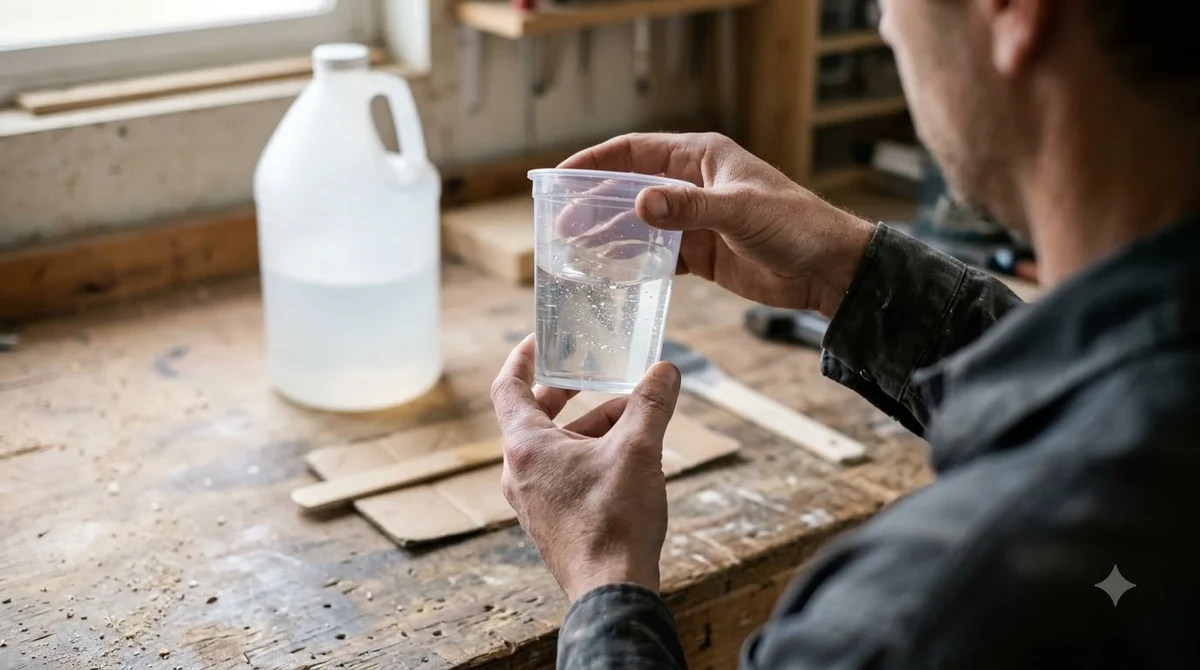
Before you commit to a large project, test a small patch of your prepared aluminum. WEST SYSTEM describes a water break test to check cleanliness: wet the surface with water and a Scotch-Brite pad, then watch how the water behaves. If it sheets evenly, the surface is likely clean, while beading or channeling means more cleaning is needed.
Curing time matters as much as prep. Epoxy King advises waiting at least 24 hours before putting any stress on a metal bond and about 72 hours for full cure strength. The same source says that room temperature between 65 and 75 degrees Fahrenheit works best. Cold metal slows curing, and very warm metal can speed it up too quickly, so check the data sheet for your product’s range.
Clamping also helps the bond stay in contact while it cures. Keep the pressure firm but not so tight that the epoxy squeezes out of the joint.
Troubleshooting Peeling and Lifting Epoxy
When epoxy peels off aluminum, the cause is usually contamination, insufficient abrasion or early loading. Epoxy King describes a surface that looks clean but still peels as one that likely has hidden contamination. Its fix is to degrease more thoroughly, sand again and degrease one more time.
| Symptom | Likely cause | Fix |
|---|---|---|
| Epoxy peels within days | Oils or oxide left on the surface | Degrease, sand to bright metal, degrease again, then recoat |
| Weak bond that cracks easily | Metal was too smooth | Abrade more aggressively with 80-grit paper |
| Coating lifts in sheets | Old paint or coating left underneath | Strip the old finish to bare metal before recoating |
| Fisheyes or bubbles | Contamination, often oils | Clean the surface again and check for leaks or residue |
Safety Gear and Ventilation When Working With Metal
Working with epoxy, solvents and metal dust calls for basic protection. Gluegun.com recommends glasses, gloves and long sleeves or pants when handling adhesives, and it says fumes can be strong enough to require a well-ventilated workspace. Solvents such as acetone and lacquer thinner need the same care.
Wear nitrile gloves when you wipe or handle prepared metal, which also keeps skin oils off the surface. Read the epoxy and solvent safety data sheets before you start, and follow the ventilation and respirator guidance they list.
Safety: Keep solvent-soaked rags away from heat and store them in a metal container with a lid. Wear nitrile gloves, use good ventilation and follow the product’s safety data sheet for chemical etchants and solvents.
Frequently Asked Questions
Will epoxy stick to aluminum without sanding?
Sanding is strongly recommended because smooth aluminum gives epoxy little to grip. Salvage Secrets says most epoxies adhere well to properly prepared aluminum, and that a primer is recommended on bare aluminum. Skipping abrasion raises the chance of peeling.
Do I need to etch aluminum before applying epoxy?
It depends on the product. Wessex Resins says WEST SYSTEM 105 with 205 needs chemical etching on aluminum, while G/flex does not. Epoxy King says modern epoxies often skip etching if you abrade well and apply quickly.
How soon after sanding aluminum should I apply epoxy?
Wessex Resins recommends applying epoxy within about four hours after abrading, and Epoxy King gives the same four-hour window. Aluminum starts forming oxide again soon after sanding, so do not leave prepared metal sitting for long.
Can I use regular two-part epoxy on aluminum for a repair?
Many two-part epoxies can work on aluminum if you degrease, abrade and apply promptly. Check the manufacturer’s data sheet for metal bonding instructions, and consider a test patch first. Wait at least 24 hours before putting stress on the repair.
Aluminum bonds with epoxy when the metal is clean, evenly scuffed and coated soon after prep. Start with degreasing and 80-grit abrasion, then confirm the product’s instructions before you choose between etching and a no-etch epoxy. For more on surface types, see Surfaces & Materials, and for a related question on foil, read does resin stick to aluminum foil.
More in Surfaces & Materials
 Can You Epoxy Over Wallpaper? The Prep Steps That Help It StickUpdated Nov 26, 2026
 Can You Epoxy Over Tile? Prep Steps That Help It BondUpdated Nov 26, 2026
 Can You Epoxy Over Laminate? Prep Steps and Limits for DIY SuccessUpdated Nov 26, 2026
 How to Seal Wood Before Epoxy for a Bubble-Free, Even FinishUpdated Nov 26, 2026
 Can You Epoxy Over Granite Countertops? Prep, Adhesion and Heat LimitsUpdated Nov 26, 2026
 Can You Epoxy Over Painted Wood? When It Works and How to Prep ItUpdated Nov 26, 2026