

We may earn a commission when you buy through links on this page, at no extra cost to you. Learn more.
Food coloring in resin can tint epoxy, but it is a weak, short-lived choice for most projects. Sources note that it can give a decent first color, yet it is not lightfast and it fades quickly in sunlight. If you use it, keep colorant at or below 6% of the combined resin and hardener volume, which is no more than 6 ml per 100 ml of mixed resin.
This guide explains how food coloring behaves in epoxy and UV resin, what it does to curing, and whether it belongs in a project that touches food. It also covers pigments that resin makers recommend and the mixing habits that keep your work clean. Read it before you open a bottle of dye, because a few minutes of planning can save a whole pour.
Can You Mix Food Coloring With Resin?
Yes, you can mix food coloring into resin, but it was not designed for that job. Resin guides explain that food dye is made for food, so it does not blend into thick resin as easily as dedicated colorants do. You may see streaks or specks if you rush the stirring step.
Many makers still use it because it is cheap and easy to find at most grocery stores. Oil-based and gel food colorings are the types most often described for resin, while most store-bought dyes are water-based and less compatible. That single detail changes how the dye behaves once it meets the hardener.
Why the type of dye matters
Oil-based food coloring has a consistency closer to resin, so it binds more easily. Water-based dye is runnier and can leave a streaky finish in UV resin, because the water displaces part of the resin’s base component. If your bottle label says water-based, expect a weaker and less even result.
Gel food coloring sits in a middle ground. It is thicker than standard liquid dye, which makes it easier to control, but it still does not match the consistency of dedicated resin colorants. Beginners often choose gel because it lets them build color slowly.
Can You Put Food Coloring in Epoxy? Results Compared
Food coloring in epoxy gives a usable tint, but the color is usually softer than what mica powder or liquid resin dyes produce. Reviewers at acrylgiessen.com note that the final color is less potent when dye and resin have different consistencies. Plan for a pale, even tint rather than a bold, saturated one.
Gel food coloring is the easiest to control for beginners, since it is light enough to darken slowly. Guides advise adding no more than two to three drops of gel, because more tends to create streaks. Conventional food coloring is usually added at half a drop and stirred with a toothpick until the color is consistent.
You can compare the main options side by side:
| Colorant type | Typical result in resin | Main concern |
|---|---|---|
| Oil-based food coloring | Best match for UV resin, moderate tint | Still fades in sunlight |
| Gel food coloring | Light, easy to build up slowly | Streaks if you add too many drops |
| Water-based food dye | Runnier, less compatible | Streaky finish in UV resin |
| Dedicated resin colorants | Stronger, more consistent color | Cost varies by product |
Food Coloring in Epoxy: Curing and Clarity Problems
Food coloring can affect how resin looks and how it sets, mainly through streaks, specks and uneven color. The main risk is poor mixing rather than the dye itself. Guides recommend stirring until no spots remain before you pour, and they warn against rushing this step.
Start with an opaque base color, then add the food coloring. The base gives the dye something to work against, much like a white canvas does for paint. Mix with a toothpick until the color is one solid shade, and scrape the sides of the cup so no unmixed dye hides there.
Keep the total colorant low. ArtResin advises that colorant should not exceed 6% of the combined resin and hardener volume, and that adding colorant to only one part can throw off the 1:1 mixing ratio. Measure both parts first, then add the color. You can read more in ArtResin’s colorant guide for epoxy.
Is Food Coloring Safe in Food-Contact Projects?
Food coloring is not a reliable choice for a surface that holds food, and the color itself is the main concern. The dye is not lightfast, so the tint is likely to change over time. Keep food-contact pieces indoors and away from direct sunlight, and treat the color as decorative only.
Resin makers also warn about mixing additives into a product sold as food safe. ArtResin states that adding alcohol ink compromises its food safety compliance, and it recommends a clear, non-tinted top coat for food-contact surfaces. The same logic applies to any tint you add. Read the manufacturer’s data sheet before you assume a finished piece is safe for food. For background on this, see is epoxy food safe.
Safety: Wear nitrile gloves, work in a ventilated space and check the product’s SDS before mixing any colorant into resin.
Better Pigment Options for Resin Art and Tabletops
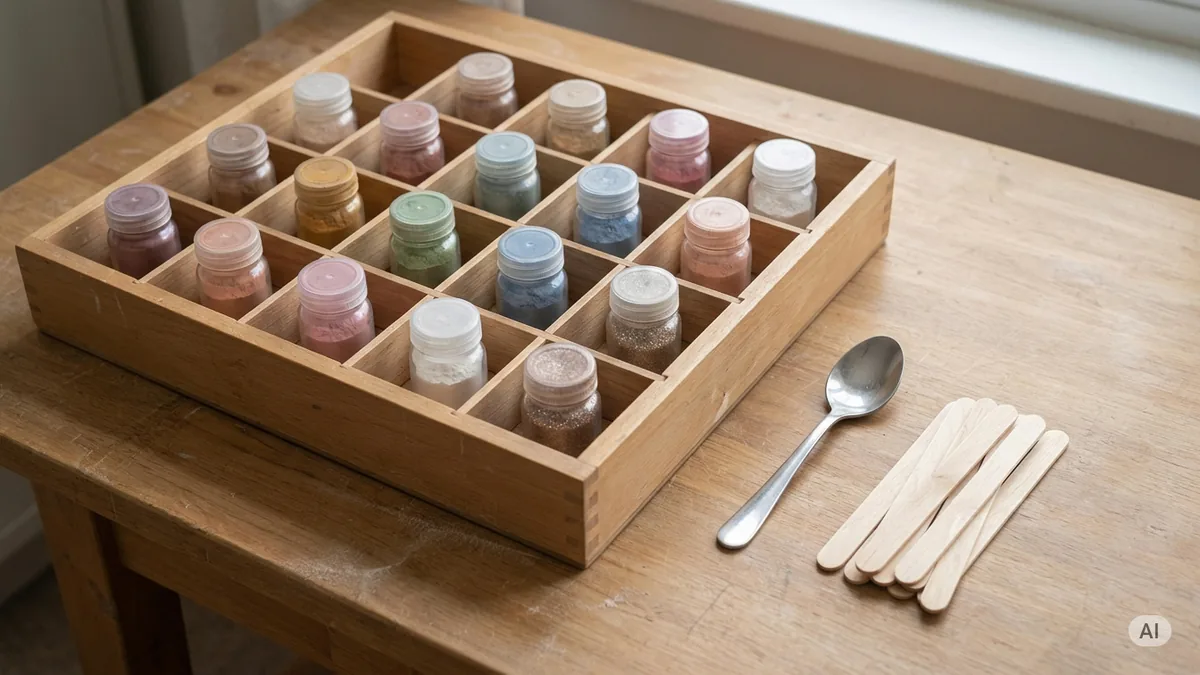
Dedicated resin colorants are the better choice for most projects. Several guides describe mica powder and liquid resin dyes as the best options because they are formulated for epoxy. They are also more intense, so you need less of them to reach a strong color.
Other common additions include powdered pigments and mica, which are widely used for geode-style work. Acrylic paint is another option, but it has limits. Guides note that acrylic paint above about 10 percent acrylic content can cause resin to cure slowly or not at all, so use a highly pigmented paint in small amounts.
| Option | Strength | Watch for |
|---|---|---|
| Mica powder | Pearlescent, versatile | Mix thoroughly to avoid graininess |
| Liquid resin dye | Designed for epoxy | Check the label for ratios |
| Acrylic paint | Inexpensive, easy to find | Use sparingly, it can dull gloss |
| Alcohol ink | Subtle, stained-glass look | Flammable and affects food safety |
Avoid materials that resin guides do not recommend, such as oil paint, watercolor, latex paint, spray paint, nail polish, ground chalk and spices like paprika and turmeric. Those can leave specks, clumps or a slimy texture, and some are flammable. For more on compatible additions, see food in resin.
Mixing Tips and Safety Gear When Tinting Resin
Good tinting depends on measuring first and mixing well. Measure resin and hardener, add your colorant, then stir until the color is even. Start with less color and add more only if needed, since a little pigment goes a long way.
- Measure the resin and hardener in the ratio on the label.
- Mix the two parts thoroughly before adding any color.
- Add the colorant and keep the total at or below 6% of combined volume.
- Stir with a toothpick until no spots or streaks remain.
- Let tinted resin sit about 15 minutes if you plan flow art, so colors do not blend.
- Pour metallics last on a cured layer if you want to keep the swirls.
Tip: Test a small sample in a cup first to check color strength and cure before you commit a full pour.
Wear gloves, keep the workspace ventilated and follow the SDS for every product on your bench. For broader safety habits, visit the Resin Safety section.
Frequently Asked Questions
Can you put food coloring in epoxy resin?
Yes, you can add food coloring to epoxy, but it is not designed for resin. Results are usually softer in color than dedicated colorants. Use gel or oil-based types and add them in small amounts.
Does food coloring fade in resin over time?
Yes, food coloring is not lightfast and will lose color when left in direct sunlight for long periods. Keep food coloring tinted pieces indoors. Sources recommend against leaving those castings in the sun.
Can I use oil-based or gel food coloring in UV resin?
Oil-based food coloring is the better match for UV resin because its consistency is closer to the resin. Water-based dye is runnier and can cause a streaky finish. Gel types work too, but add only two to three drops.
Can acrylic paint stop epoxy from curing?
Too much acrylic paint can interfere with curing. One guide says paint above about 10 percent acrylic content can cause resin to cure slowly or not at all. Choose a highly pigmented paint and use only a small amount.
If you are planning a project, start with a dedicated colorant and a small test cup. Keep food-contact pieces separate from decorative tints, and check the SDS before you mix.
More in Resin Safety
 Is There a Food Safe Epoxy? Yes, but Only When Fully CuredUpdated Nov 26, 2026
 How to Get Rid of Epoxy Smell: Fixes That Actually Reduce OdorUpdated Nov 26, 2026
 Can You Put Food in Resin? Safer Choices and How to Prevent RotUpdated Nov 26, 2026
 Do You Need a Respirator for Resin? When Ventilation Is Enough and When It Isn’tUpdated Nov 26, 2026
 Is Epoxy Food Safe Once Fully Cured? What Makers Need to KnowUpdated Nov 26, 2026
 Is EcoPoxy Food Safe? What Makers Should Verify Before UseUpdated Nov 26, 2026