

We may earn a commission when you buy through links on this page, at no extra cost to you. Learn more.
Is epoxy flammable? Yes while it is liquid, and much less so once it is fully cured. According to FirefighterNow, uncured epoxy resin typically has a flash point between 300°F and 400°F (149°C to 204°C), which makes it a combustible liquid. Fully cured epoxy is classified as a combustible solid that will not ignite from a spark or incidental heat. The bigger practical danger during a project is the heat the mixed resin produces as it cures.
This guide explains where the fire risk comes from at each stage of an epoxy project. It also covers the workshop steps that reduce that risk, based on OSHA and CDC guidance and the safety notes published by firefighting sources. Read the product’s safety data sheet (SDS) before you start, because the exact hazards depend on your specific product.
Uncured Epoxy Resin Fire Behavior
Liquid epoxy is the form that burns most easily. The resin and hardener are the two parts that react to form the hard plastic, and each one behaves differently around heat.
Uncured resin has a flash point in the range given above. Flash point is the lowest temperature at which a liquid gives off enough vapor to ignite briefly, so a liquid that is warm enough can become a fire hazard even without an open flame nearby.
The hardener matters too. FirefighterNow notes that some amine hardeners are more volatile and have lower flash points than the resin component. That means a product’s hardener can carry a higher fire concern than its resin, so check the SDS for both parts.
| Form of epoxy | Fire behavior according to sources | What it means in your shop |
|---|---|---|
| Uncured liquid resin | Flash point about 300°F to 400°F (149°C to 204°C), a combustible liquid | Keep it away from open flames, sparks, and heat sources |
| Amine hardener | Some types are more volatile with lower flash points than the resin | Read the SDS for the hardener separately |
| Fully cured epoxy | Combustible solid that will not ignite from a spark or incidental heat | It can still burn in a sustained fire and feed a fire |
| High temperature epoxy | Keeps structural integrity up to about 250°F to 300°F (121°C to 149°C), not fireproof | Rated for heat tolerance, not for resisting combustion |
Tip: Check the flash point and fire data in Section 9 of the SDS for your exact product. Those numbers vary between brands and formulas, so a general range is only a starting point.
Can Epoxy Catch Fire While It Cures
Yes, mixed epoxy can get hot enough to smoke or ignite during curing. The chemical reaction between resin and hardener releases heat, and this is called an exothermic reaction. The heat builds up quickly when a lot of material is mixed at once.
FirefighterNow states that large mixed batches can reach temperatures high enough to smoke or cause fires if they are left in a bucket. A deep pool holds heat in, while a thin layer spreads it out and lets it escape. This is why the heat risk is greatest in a full cup or bucket that sits unattended.
To reduce this risk, pour in thin layers rather than leaving a deep pool of mixed epoxy. Pour mixed resin out of the mixing container onto your work surface soon after mixing, and do not leave a full bucket sitting in a warm room or near a heat source. Keep an eye on the pot while it reacts, especially on large batches.
Safety: If mixed epoxy starts to smoke or feels very hot, move it outdoors away from anything flammable and follow the instructions on the product label and SDS. Do not try to cool it by adding more material.
Cured Epoxy and House Fires
Once epoxy has fully cured, its fire behavior changes. It is a rigid thermoset plastic that is much harder to ignite than the liquid. It will not catch from a spark or a small amount of incidental heat.
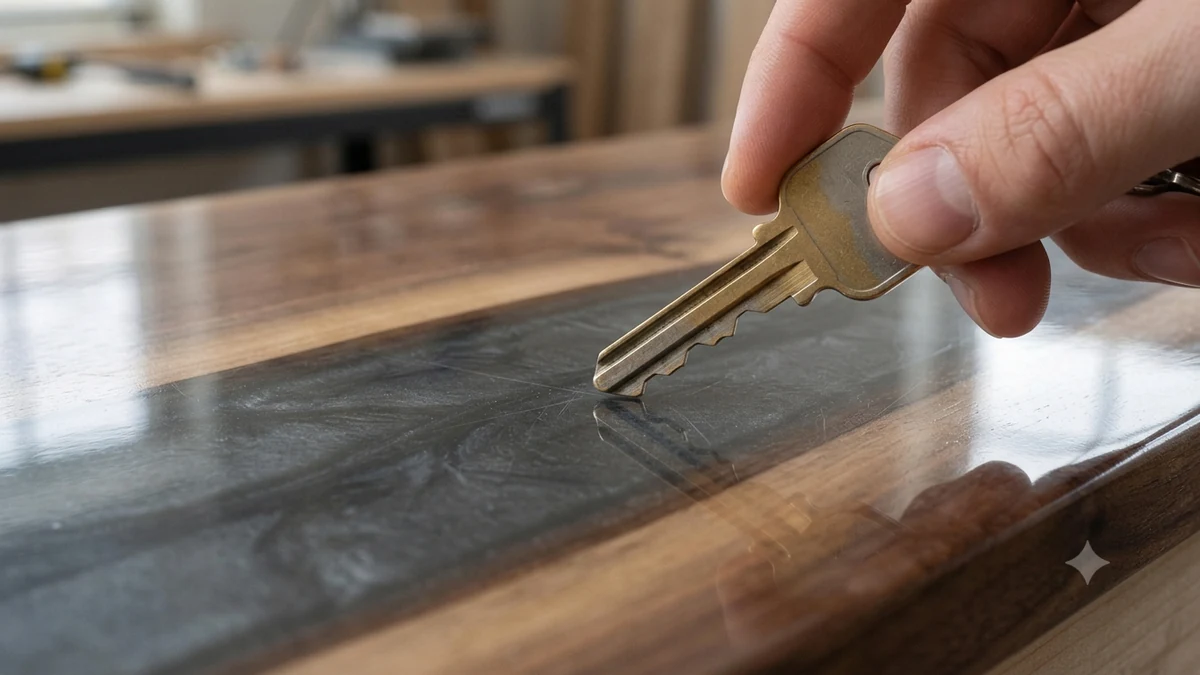
Cured epoxy still burns in a sustained fire, and it adds fuel to that fire. FirefighterNow points out that epoxy coatings on garage floors and epoxy-bonded boat hulls can contribute to fire spread and smoke production when a building or vessel is burning. So a cured epoxy floor is not fire-proof, even though it is harder to light.
The smoke is the other concern. According to FirefighterNow, smoke from burning cured epoxy contains irritating and potentially toxic compounds. If a home or shop is on fire, that smoke is one more reason to leave the building and not stay to fight the fire.

UV Resin Safety Basics
UV resin is a different product family from two-part epoxy, and it cures under ultraviolet light instead of by mixing a hardener. The sources used for this guide do not give specific fire numbers for UV resins, so do not assume they behave like the epoxy figures above.
The safe approach is the same as for any resin. Read the SDS for your exact UV resin, check its flash point and fire data, and keep it away from open flames and heat sources. Work in a ventilated area and wear gloves when handling it.
Curing lights also produce heat, so keep the lamp and the resin away from anything that could scorch. Turn off lamps when you are not using them and store any unused resin in its original container, sealed and out of direct sun.
Epoxy Safety Precautions for Your Workshop
Good workshop habits cut both fire and health risks. The CDC and CPWR hazard alert on epoxy resin systems recommends three core steps: use engineering controls, wear personal protective equipment, and practice good housekeeping and personal hygiene. Those steps apply to hobby projects as much as to construction jobs.
OSHA’s woodworking finishing guidance recommends local exhaust ventilation for coating and gluing work. It also says manual spraying should happen in a spray booth or a separate ventilated area. For a home shop, that usually means opening windows, running a fan that moves air out of the room, and avoiding spraying epoxy indoors.
Follow these steps when you work with epoxy:
- Read the SDS first. Note the flash point, fire-fighting measures, and handling notes for both resin and hardener.
- Ventilate the area. Epoxy vapors can build up in a closed room, so keep air moving before you open the containers.
- Wear nitrile gloves and eye protection. Epoxy can cause skin irritation, and repeated contact can lead to sensitization over time.
- Keep ignition sources away. Stay clear of open flames, pilot lights, sparks from grinders, and hot surfaces while handling liquid resin.
- Mix only what you can use. Smaller batches with thin pours reduce heat buildup.
- Clean up promptly. Wipe spills and keep the bench clear of rags soaked in solvent or resin.
The OSHA eTool on finishing chemicals notes that many solvents and coatings used in finishing are extremely flammable, especially in large quantities or unventilated spaces. If your project uses solvent-based cleaners alongside epoxy, store those separately and follow their own label warnings. You can read more about the broader health side of resin work in our guide on whether epoxy resin is toxic.
Tip: Keep a metal or heavy plastic lid, dry sand, or a fire extinguisher rated for your workspace within reach. Many small resin fires start from a hot pot left on a bench, so plan the spot before you mix.
Storing and Disposing of Epoxy Safely
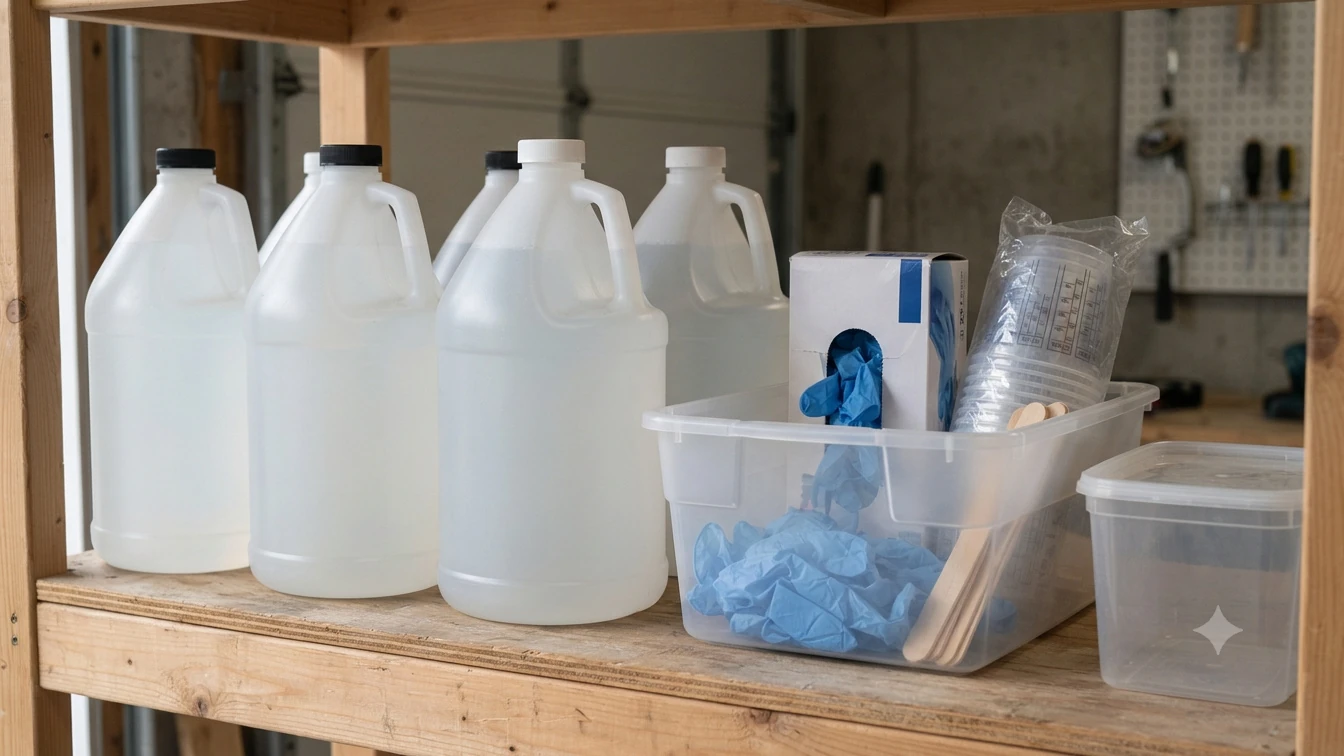
Store epoxy in a cool, dry place away from heat, sparks, and open flames. Keep resin and hardener sealed, and store them separately so they never mix by accident. Follow the storage conditions listed in Section 7 of the SDS for your product.
Do not store mixed or partly mixed epoxy in a bucket that could warm up. Let leftover mixed resin cure in a thin layer somewhere it can be watched, or dispose of it as the label directs. Never pour unmixed resin down a drain.
Disposal rules vary by area. The SDS has a disposal section that describes waste residues and how to handle contaminated packaging. Follow that guidance and your local household hazardous waste rules, and check with your local waste office if you are unsure.
For more background on resin safety basics, see our resin safety section, and for food-contact questions read whether epoxy is food safe. The CDC hazard alert is a useful reference for the health side of handling epoxy systems, and the OSHA woodworking finishing hazards eTool covers the fire and ventilation side in more detail.
Frequently Asked Questions
Is epoxy flammable once it is cured?
Cured epoxy is classified as a combustible solid. It will not ignite from a spark or incidental heat, but it will burn in a sustained fire and add fuel to it. Its smoke can contain irritating and potentially toxic compounds.
What is the flash point of uncured epoxy resin?
FirefighterNow gives a typical flash point of 300°F to 400°F (149°C to 204°C) for uncured liquid epoxy resin. Some amine hardeners are more volatile and have lower flash points, so check the SDS for both parts.
Can mixed epoxy catch fire while curing in a bucket?
Yes, large mixed batches can heat up during curing and reach temperatures high enough to smoke or cause a fire if left in a bucket. Pouring thin layers and avoiding deep pools reduces the buildup of heat.
Are high temperature epoxies fireproof?
No. High temperature epoxies are rated to keep their structural integrity up to about 250°F to 300°F (121°C to 149°C), but they resist heat rather than combustion. Treat them as flammable under a sustained fire.
Liquid epoxy is the main fire concern, and mixed batches add a heat risk during curing. Once cured, the material is much harder to ignite but still burns. Check the SDS for your product, ventilate your space, and store and dispose of epoxy according to the label.
More in Resin Safety
 Is There a Food Safe Epoxy? Yes, but Only When Fully CuredUpdated Nov 26, 2026
 How to Get Rid of Epoxy Smell: Fixes That Actually Reduce OdorUpdated Nov 26, 2026
 Can You Put Food in Resin? Safer Choices and How to Prevent RotUpdated Nov 26, 2026
 Do You Need a Respirator for Resin? When Ventilation Is Enough and When It Isn’tUpdated Nov 26, 2026
 Food Coloring in Resin: Results, Fading and Safer AlternativesUpdated Nov 26, 2026
 Is Epoxy Food Safe Once Fully Cured? What Makers Need to KnowUpdated Nov 26, 2026