

We may earn a commission when you buy through links on this page, at no extra cost to you. Learn more.
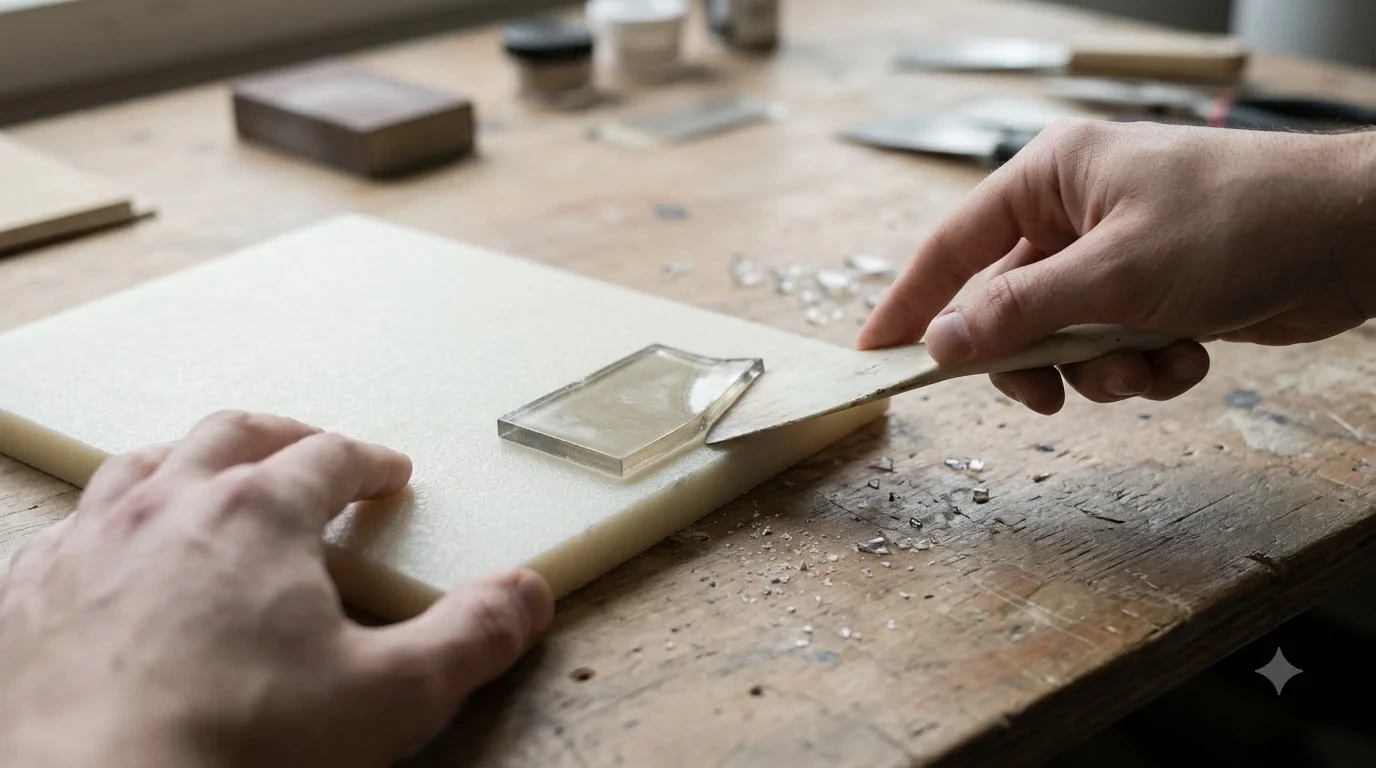
Does epoxy stick to HDPE plastic? Not reliably on its own, because HDPE has very low surface energy that epoxy struggles to wet out and grip. PlasticRanger rates polyethylene, which includes HDPE (recycling codes #2 and #4), as Very Poor for epoxy compatibility. A bond can still be possible with careful cleaning, light abrasion, flame treatment, or a polyethylene-specific adhesive, but the result depends on the prep and the stress the joint will carry.
If you are trying to repair a HDPE container, coat a HDPE surface, or glue two HDPE pieces together, the answer changes with the method you choose. This guide explains why epoxy often lets go, which surface steps improve the grip, and which alternatives suit repairs that must hold weight or flex.
Why HDPE Resists Epoxy Adhesion
HDPE resists epoxy mainly because of its surface chemistry. Epoxy needs a surface it can wet out and bond to, and HDPE gives it very little to hold.
Epoxy bonds through two routes: mechanical interlocking with surface texture and chemical attraction at the interface. Low surface energy plastics block both, so the resin beads up instead of spreading. Resin Expert notes that many superglues bead on HDPE instead of sinking in, which is the same wetting problem showing up in a different adhesive.
The surface also feels different from many other plastics. Forum users describe HDPE as slippery and waxy, similar to cutting board plastic and the thin film in some shopping bags. That slick feel is a warning sign that epoxy may peel away after curing.
Polyethylene is not the only difficult material. One SwayLocks user also noted that polyester resin does not stick to HDPE either, which shows how little adheres to it without special preparation.
Surface Preparation Steps That Improve Bonding
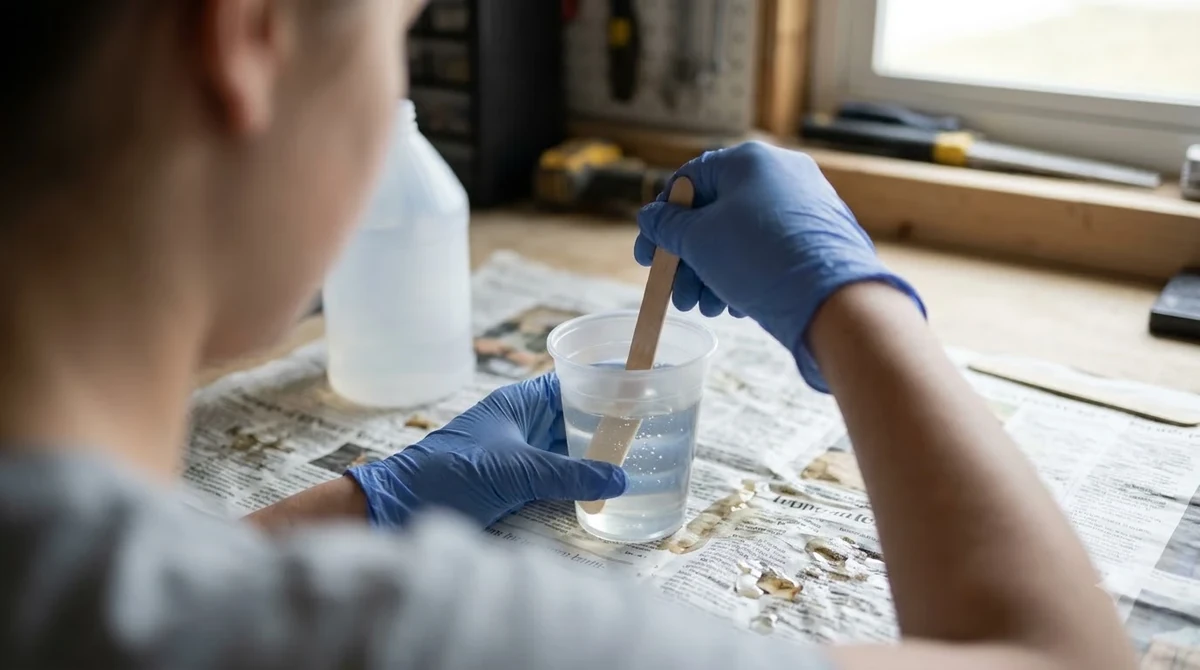
Clean, scuff, and clean again before you apply any epoxy. Prep will not turn HDPE into an easy plastic, but it removes the factors that make failure more likely.
- Degrease the surface. Wipe it with isopropyl alcohol or acetone on a lint-free cloth. PlasticRanger recommends letting it dry at least 10 minutes.
- Check for hidden contamination. New plastic often carries mold release oils from manufacturing, so clean new HDPE more thoroughly than you think it needs.
- Sand with the right grit. Hunker recommends silicon carbide or aluminum oxide paper in the 120 to 150 grit range. PlasticRanger suggests 400 grit or a Scotch-Brite pad for softer plastics.
- Avoid overheating. Sanding creates friction. PlasticRanger warns that heat can melt plastic into a smooth, glassy layer that epoxy cannot grip.
- Remove the dust. Wipe again with isopropyl alcohol and let it evaporate fully. PlasticRanger cites 10 to 15 minutes in normal ventilation.
- Apply epoxy promptly. PlasticRanger advises applying epoxy within one hour of the final cleaning, and handling the surface only with gloved hands.
Scratches can help or hurt. A SwayLocks user said scratches give epoxy something to grab, so the surface must be carefully cleaned afterward. Deep gouges can also trap air and weaken a repair, so scuff lightly rather than digging into the plastic.
Flame Treating and the Water Bead Test
Flame treating is the most common prep method for HDPE that forum users and adhesive guides describe. It temporarily raises the surface energy so epoxy can spread and hold better.
Hunker says to move the yellow part of a propane torch flame gently over the HDPE for a few seconds. A Chief Delphi user recommended continuing until water no longer beads on the surface, and the same forum notes that flame prep still may not give enough strength for a joint under heavy stress. Read the full Chief Delphi lamination thread on HDPE for the forum discussion behind these methods.
Use the water test to check your work. Hunker explains that water beads on untreated HDPE but smears and spreads on properly flame-treated HDPE. If the beads stay round, treat the surface again before you glue anything.
Safety: Wear eye protection, gloves, and clothing when using a torch. Keep the nozzle clean, and never flame treat HDPE fuel canisters. Read your torch and adhesive safety sheets before you start.
Adhesives Compared for HDPE Repairs
Several adhesives appear in trade sources for polyethylene. Each one has different strengths, so match the product to the job rather than assuming a standard epoxy will work.
| Option | What the sources say | Best use |
|---|---|---|
| Standard epoxy on prepped HDPE | Bonds are possible after sanding or flame treatment, but the least strong method according to one forum user | Light, non-structural repairs |
| TAP Poly-Weld Adhesive | Mix resin and hardener for two minutes; Hunker says it reaches 90 percent of adhesive power in 24 hours | Cracks and holes in HDPE containers |
| J-B Weld Plastic Bonder | Hunker says sanded HDPE needs 24 hours to cure and suits crafts that do not bear weight | Decorative or light craft joins |
| Permabond TA4631 | A Chief Delphi user calls it a polyethylene-specific glue that needs no surface prep | Structural joins where cost is acceptable |
| 3M 4200 urethane adhesive | A Chief Delphi user says it bonds HDPE, stays flexible, and works with light sanding or none | Joints that flex or see movement |
| 3M VHB tape | Forum users say it works on HDPE and needs very thorough removal of oils | Strips or panels with bolts for added compression |
| Superglue | Resin Expert says many beads on HDPE instead of sinking in | Generally not recommended |
Adhesives built for polyethylene behave differently from a general epoxy. Check the manufacturer’s data sheet for mixing ratios, pot life, and cure times, since those details vary by product.
Tip: Start with a scrap piece of the same HDPE. Test the flame treatment or the adhesive there before you commit the finished part.
Testing Bond Strength Before a Full Project
A patch test shows you how the bond behaves before the part matters. Use a hidden area or an offcut from the same plastic.
PlasticRanger recommends curing the test patch for at least 7 days before peeling it off. If the epoxy separates cleanly, the plastic type may be incompatible or the prep needs another pass. Clean separation with no plastic residue on the epoxy is a red flag.
Clamp or weight the joint while it cures. Hunker suggests grippers or weights to keep HDPE pieces together during curing, and notes that sanded and glued HDPE is best for projects that do not carry weight. Plan your test around the load the finished piece will see, not just whether it looks attached.
Mold Release and Pouring Resin on HDPE
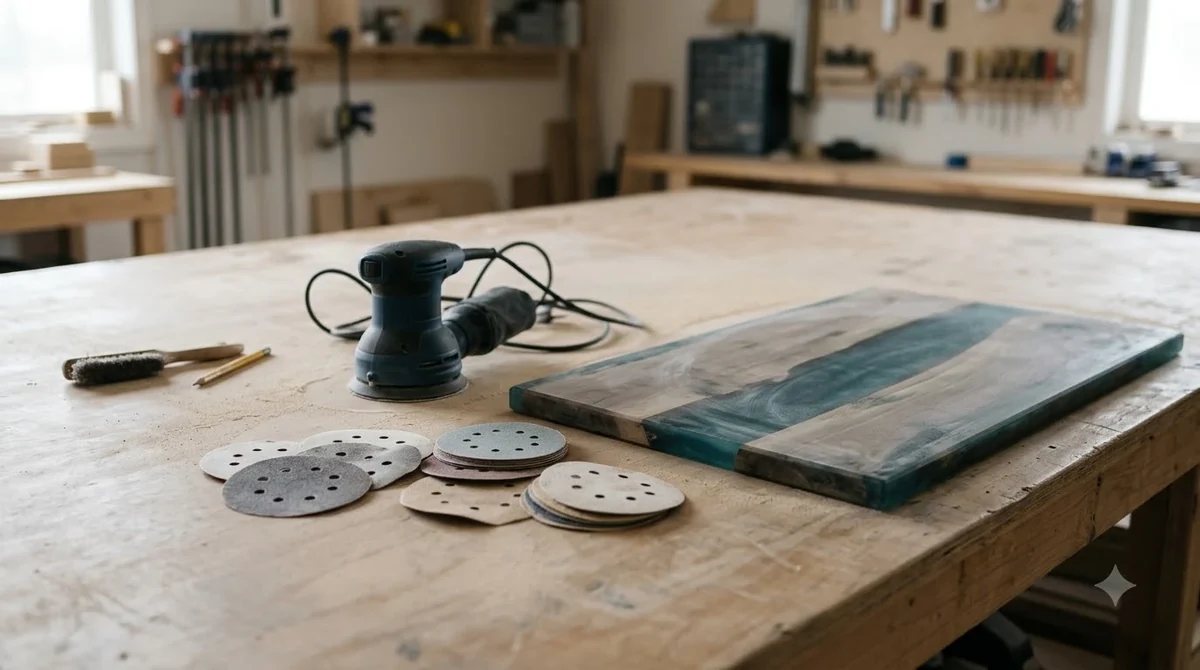
HDPE is often a good mold surface for casting, because cured epoxy tends to release from it. PlasticRanger states that polyethylene and polypropylene molds release cured epoxy without any treatment, which is why many resin artists use them.
That same low adhesion means HDPE is a poor choice for a surface you want epoxy to stay on. If you pour resin onto a HDPE workbench or base to make a permanent piece, the cured layer may peel. For a permanent coating, prep the HDPE as described above or use a different base. For more on this topic, see whether epoxy sticks to other common plastics.
A SwayLocks forum user who casts on glass and Formica reported that HDPE does not need wax but scratches more easily. Protect the surface from gouges so the mold keeps a smooth finish across many pours.
Frequently Asked Questions
Can you glue HDPE to HDPE with epoxy?
Yes, but the bond depends heavily on prep and the adhesive. Resin Expert says welding is the strongest way to join two HDPE pieces, and welding cannot join HDPE to other materials. Epoxy or a polyethylene adhesive can work for lighter joins.
Is HDPE a good surface for pouring resin?
HDPE works well as a mold because cured epoxy tends to release from it. It is a poor base for a permanent coating, because the cured resin may not stay bonded. Prep the surface or choose a different base if you want the piece to stay put.
Does flame treating HDPE help epoxy bond?
It can help. Flame treatment raises surface energy, and the water bead test shows whether the surface changed. A Chief Delphi user noted it may still not provide enough strength for a joint under heavy stress.
What glue works best on HDPE plastic?
There is no single best answer, because the right choice depends on the joint. Forum users point to polyethylene-specific glues, flexible urethane adhesives, and VHB tape for different situations. Check the manufacturer’s data sheet and test the bond before using it on a finished part.
Epoxy can work on HDPE, but it usually needs thorough cleaning, proper abrasion or flame prep, and a patch test before you trust it. For related reading on compatible materials, browse the Surfaces & Materials guides, and compare how epoxy behaves on silicone before you pick a release surface for your next project.
More in Surfaces & Materials
 Can You Epoxy Over Wallpaper? The Prep Steps That Help It StickUpdated Nov 26, 2026
 Can You Epoxy Over Tile? Prep Steps That Help It BondUpdated Nov 26, 2026
 Can You Epoxy Over Laminate? Prep Steps and Limits for DIY SuccessUpdated Nov 26, 2026
 How to Seal Wood Before Epoxy for a Bubble-Free, Even FinishUpdated Nov 26, 2026
 Can You Epoxy Over Granite Countertops? Prep, Adhesion and Heat LimitsUpdated Nov 26, 2026
 Can You Epoxy Over Painted Wood? When It Works and How to Prep ItUpdated Nov 26, 2026