

We may earn a commission when you buy through links on this page, at no extra cost to you. Learn more.
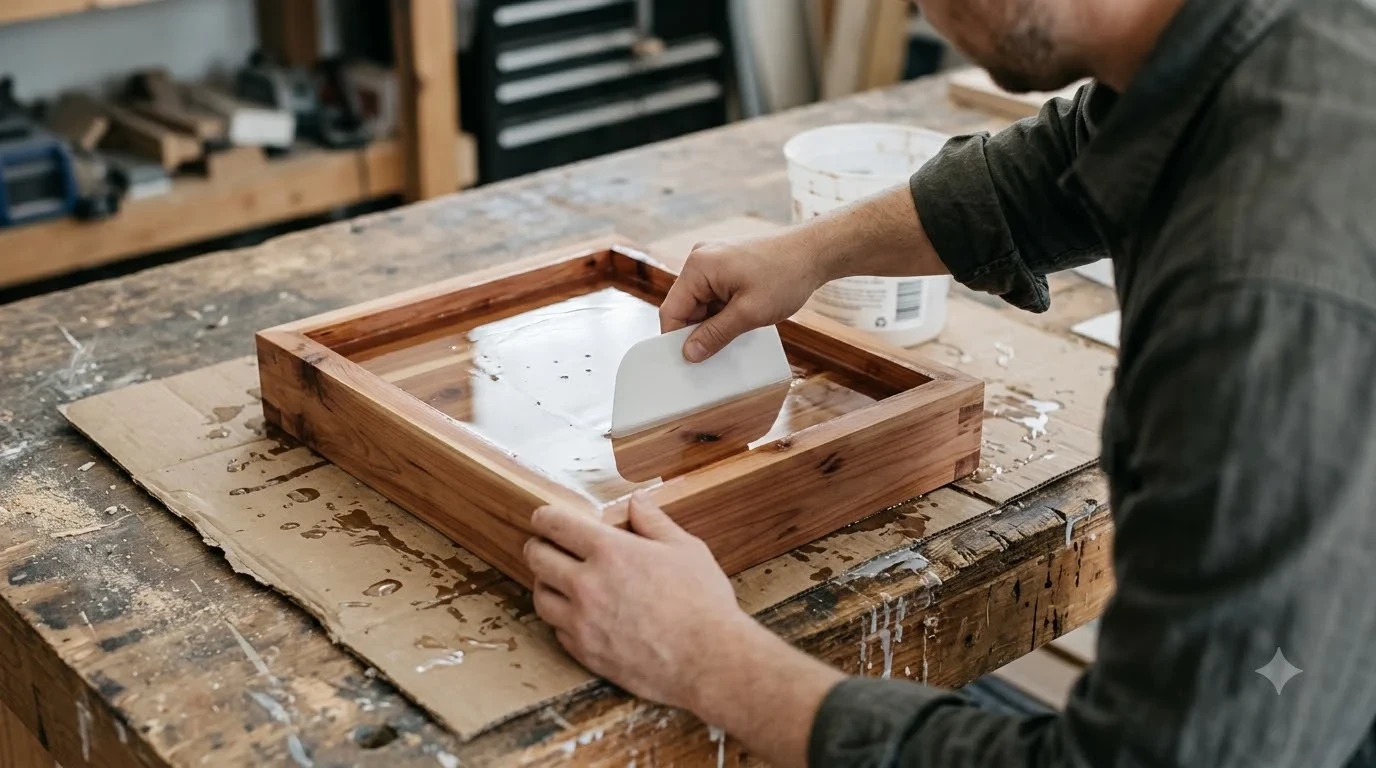
How much deep pour epoxy do I need? Multiply the pour’s length, width and depth in inches, then divide by 231 to get US gallons. Add about 10 percent for waste, and round up to whole kits. A 12 × 12 in mold filled 1 inch deep needs about 144 cubic inches, or roughly 0.69 gallon of mixed resin once you add waste. The 231 figure is the exact size of a US liquid gallon in cubic inches, so the math stays simple.
This guide shows you how to turn a mold, river channel or slab into a volume you can buy against. It also covers how pour depth limits change the number of kits and the number of pours you need.
How Deep Pour Epoxy Coverage Works
Epoxy is sold by volume but applied by depth, so every coverage question reduces to area times thickness. Once you know the volume of the cavity, you know the mixed resin you need. The hard part is usually measuring correctly, not the arithmetic.
Deep pour casting resins are a different category from coating epoxies. TotalBoat says its coating epoxies are limited to about 1/8 to 1/4 inch per layer, while its ThickSet and Fathom casting epoxies go much deeper, depending on the size of the casting. Always check the maximum depth on your own product’s technical data sheet before you plan the job.
Calculating Volume From Your Mold Dimensions
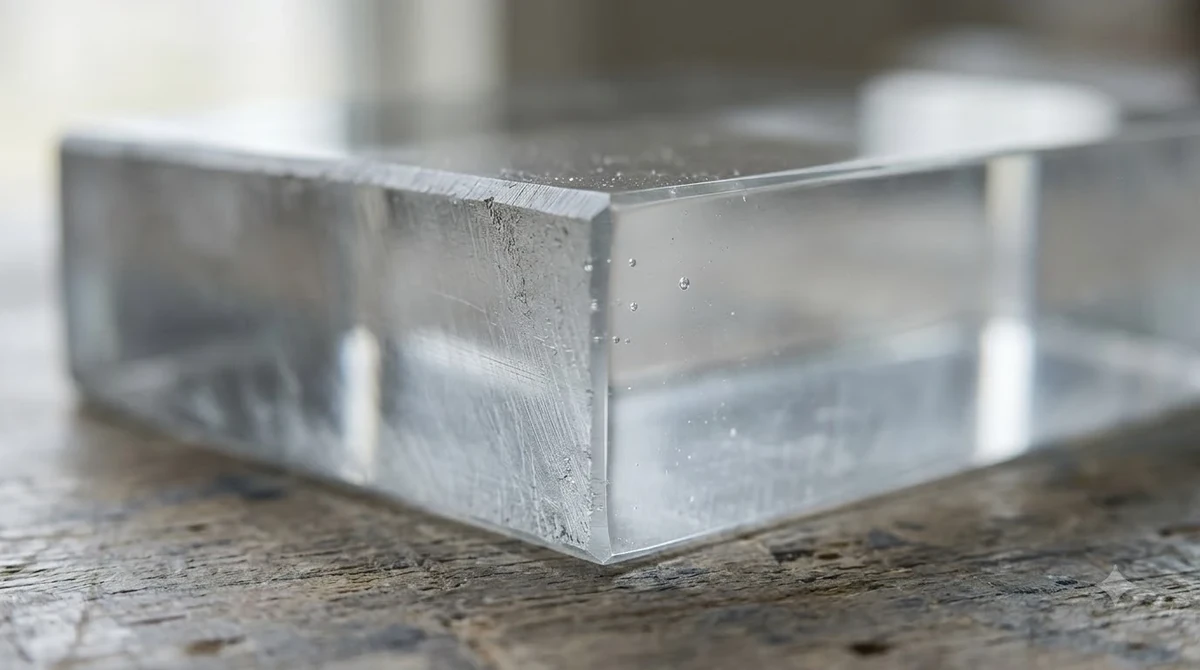
The core formula is short. You multiply area by depth, add any void volume, add waste, and then divide by 231. Each step has one job, and skipping one is the most common reason people run short.
The 4calculators epoxy coverage calculator writes the formula as gallons = (area in² × thickness in + void in³) × (1 + waste) ÷ 231. Use the same inch units for every measurement so the result comes out in gallons.
- Measure the inside length and width. Measure inside any dam or form, not the outside edge of the wood or slab.
- Multiply length by width to get the area in square inches.
- Multiply area by the total pour depth in inches to get cubic inches.
- Add the void volume for any river channel, knot or cavity below the flat surface.
- Multiply by 1.10 for a 10 percent waste allowance.
- Divide by 231 to convert cubic inches to US gallons.
For a round mold, measure the inside diameter, divide by two for the radius, square it, multiply by pi and then by the depth. The result is still cubic inches, so you follow the same steps from the waste line onward. How Much Epoxy Do I Need for a Table Top explains a closely connected part of this problem.
Coverage Table by Pour Depth
Coverage drops fast as depth rises, because each square foot takes more resin. A 1.5 gallon kit that covers 10 square feet at 1/4 inch covers only 1.25 square feet at 2 inches. Use the table to sanity-check your result before you order.
The figures below come from UltraClear’s deep pour coverage chart for a 1.5 gallon kit. They are reference numbers, and the chart itself says pour depth per layer must follow product instructions.
| Pour depth | Coverage per 1.5 gal kit | Coverage per 3 gal (two kits) |
|---|---|---|
| 1/4 inch | 10 sq ft | 20 sq ft |
| 1/2 inch | 5 sq ft | 10 sq ft |
| 1 inch | 2.5 sq ft | 5 sq ft |
| 2 inches | 1.25 sq ft | 2.5 sq ft |
Tip: Work the table backward. If you need 10 square feet at 1 inch, you need about four 1.5 gallon kits before waste, so plan for at least five.
Worked Examples for Molds, Slabs and River Tables
Real projects rarely fit one neat number, so it helps to run the math on a few common shapes. Each example below uses the same formula and the same 10 percent waste allowance.
Small casting mold. A 12 × 12 in mold filled 1 inch deep has 144 in² of area. That gives 144 in³, plus 10 percent, or 158.4 in³. Divided by 231, the answer is about 0.69 gallon of mixed resin. One 1.5 gallon kit covers it with room to spare.
Table slab. A 36 × 12 in pour at 1 inch deep gives 432 in³. With waste, that is 475.2 in³, or about 2.06 gallons. Round up and you need three gallons of mixed resin, which means two 1.5 gallon kits.
River table with a channel. Suppose the same 36 × 12 in top has a river channel that holds about 210 in³ when you fill it with water. The total becomes (432 + 210) × 1.10, or about 705 in³. That is roughly 3.05 gallons, so you would round up to four gallons, or three 1.5 gallon kits with a little left over. Background on this topic is covered in How Much Epoxy Do I Need for a Tumbler.
Notice how much the channel changed the answer. The resin you cannot see in the surface area can easily be a third or more of the total.
Buying Tips, Waste and Runoff
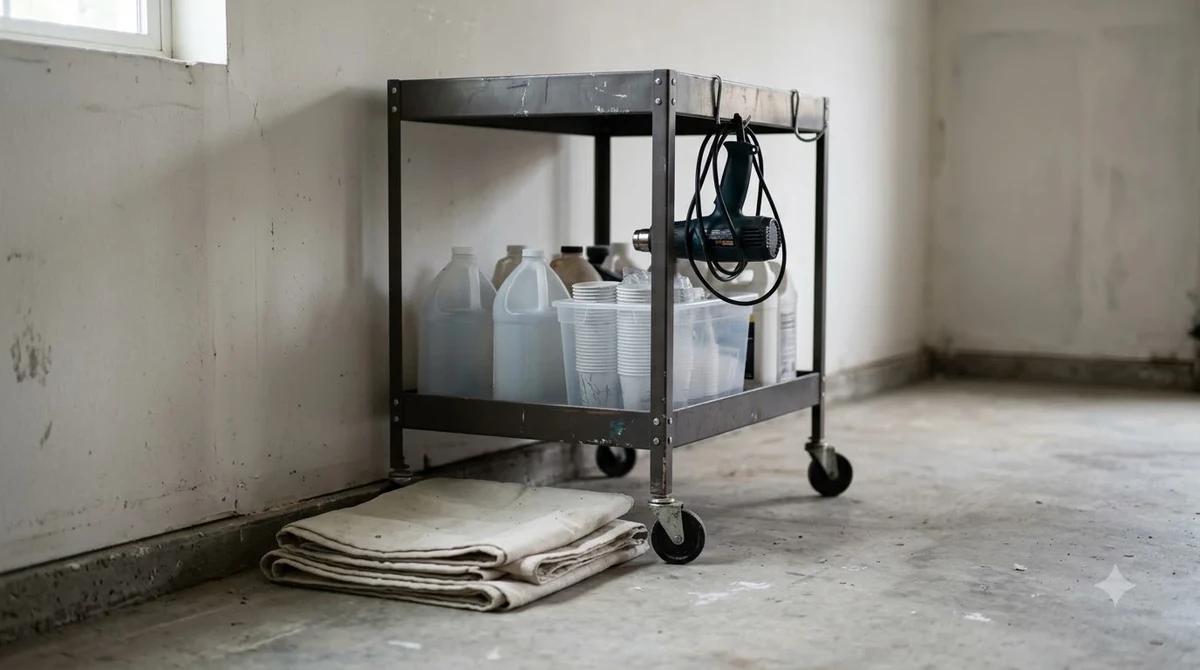
Waste and runoff are where most shortfalls begin. Some resin always stays in the mixing cup and on the stir stick. Pouring over the edges adds more loss, and the UltraClear chart says to add about 30 percent for runoff when you pour over the sides.
- Add 10 percent for a contained pour inside a dam with clean edges.
- Add more for open edges. Pouring over the sides can call for about 30 percent extra, according to UltraClear.
- Add for objects. Embedded items displace resin, but they also need resin above them to be covered, so the net effect can go either way.
- Measure channels by filling them. Seal the underside, fill with water or dry rice, and measure the volume in a jug.
Kit sizes are fixed, so round up to the next whole kit. Check the mixed volume on the label, because a kit listed by resin only can yield less mixed material than you expect. If you are comparing sellers, you can also read how much does epoxy cost before you decide on quantities.
Pour Depth Limits and Layering Tips
Deep pour resin can often go in thicker than a coating epoxy, but it still has a limit per layer. The limit exists because the curing reaction gives off heat, and too much heat in one layer can cause bubbling, cracking, yellowing and shrinkage.
UltraClear says its Deep Pour Epoxy can go up to 1 inch per layer, with 12 hours between layers. Two-inch pours are possible, but the company says they need an experienced user and a cool, controlled room. TotalBoat’s Fathom casting epoxy is rated up to 3 inches for larger castings, and its ThickSet epoxy up to 2 inches for smaller castings using less than 10 ounces.
- Read the data sheet for the exact per-layer depth of your product.
- Keep the work area cool. TotalBoat advises staying below 80°F to manage heat.
- Wait for each layer to set. TotalBoat says a layer you can indent with a fingernail can be recoated without scuff-sanding.
- Enter the depth you actually plan to pour in any calculator, not the product maximum.
If your project is deeper than one layer, plan the number of pours before you buy. Each pour uses part of the total, and each layer needs its own cure window.
For a step-by-step guide to the resin volume, the Calculators & Coverage hub lists related tools. The TotalBoat guide to single-layer pour depth explains why coating and casting epoxies behave differently.
Safety: Wear nitrile gloves, work in a ventilated space and read the product’s safety data sheet before mixing. Keep the room temperature in mind, since a large mixed batch can heat up quickly. To understand the system behind this, read Can You Use Deep Pour Epoxy for Table Top.
Frequently Asked Questions
How deep can I pour epoxy in one layer?
It depends on the product. UltraClear Deep Pour Epoxy goes up to 1 inch per layer, with 12 hours between layers. Coating epoxies such as TotalBoat TableTop Epoxy are usually limited to about 1/8 to 1/4 inch per pour, so check the data sheet first.
Can I use coating epoxy for a deep casting?
TotalBoat says you can, but it takes more time. Because coating epoxy generates more heat per thickness, you must pour it in thin layers and step-pour the piece. Expect multiple cure windows instead of one large pour.
How long should I wait between epoxy layers?
Wait until the previous layer has cooled to room temperature, which TotalBoat gives as 70 to 80°F. UltraClear’s deep pour product uses 12 hours between layers. Warmer conditions speed setting, so the wait gets shorter in a warm room.
Do I need extra epoxy for waste and runoff?
Yes. A 10 percent allowance is a common starting point for a contained pour. If you pour over open edges, UltraClear suggests adding about 30 percent for runoff. Round up to whole kits so you do not run short mid-pour.
Measure carefully, run the formula once with your real depth, and then round up to the next kit. If the number lands near a kit boundary, buy the extra kit, since leftover resin is easier to manage than a short pour.
More in Calculators & Coverage
 How to Measure Epoxy Resin and Hardener by Weight or VolumeUpdated Nov 26, 2026
 MAS Epoxies Resin Calculator: How Much Epoxy Your Project NeedsUpdated Nov 26, 2026
 How Much Does UV Resin Cost Per Ounce and Per Project?Updated Nov 26, 2026
 Cost of a Gallon of Epoxy Resin and How Far One Gallon GoesUpdated Nov 26, 2026
 How Much Does Epoxy Cost? Gallon Prices and Project BudgetsUpdated Nov 26, 2026
 Epoxy Calculator: How Much Resin Your Project Really NeedsUpdated Nov 26, 2026