

We may earn a commission when you buy through links on this page, at no extra cost to you. Learn more.
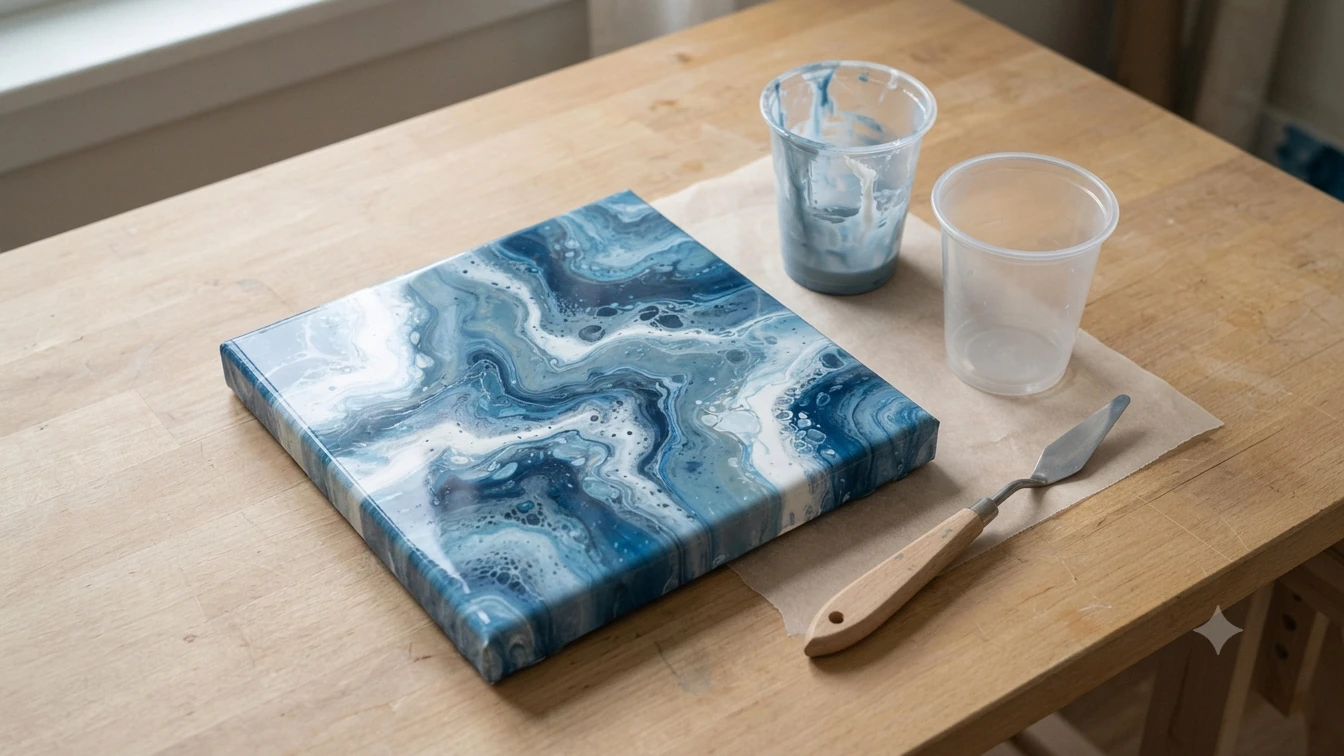
Can you mix alcohol ink with resin? Yes, but only within limits. ArtResin advises keeping any colorant under 6% of the total resin and hardener volume, so no more than 6 ml of colorant per 100 ml of mixed resin. Adding more can stop the resin from curing properly. Resin Obsession also warns that too much alcohol ink can leave epoxy cured soft or bendy, and that problem cannot be fixed afterward.
Alcohol ink is a popular way to color epoxy, especially for jewelry, coasters and petri dish designs. It behaves differently from pigment or mica, though. This guide explains which resins handle it best, how to mix it cleanly, how much to use, and what causes cloudiness, cells and color changes.
What Alcohol Ink Is and How It Behaves
Alcohol ink is a dye-based liquid suspended in isopropyl alcohol, according to Resinartbasics. Because it is a dye rather than a solid pigment, it can stain the resin instead of sitting on top as particles do. That is why the colors look translucent and glassy in a finished piece.
The alcohol carrier is what makes this ink unusual. ArtResin notes that alcohol breaks down resin, which is why alcohol ink is the only common colorant that can produce petri dish art. The same solvent action also means the ink can react with the resin while it is still liquid.
- Dye-based inks are more fluid and spread into the resin.
- Pigment-based inks are more opaque and vivid, according to Hirosart.
- Flammability is a concern once the ink is in the resin, which the next sections cover.
Which Resins Work Best with Alcohol Ink
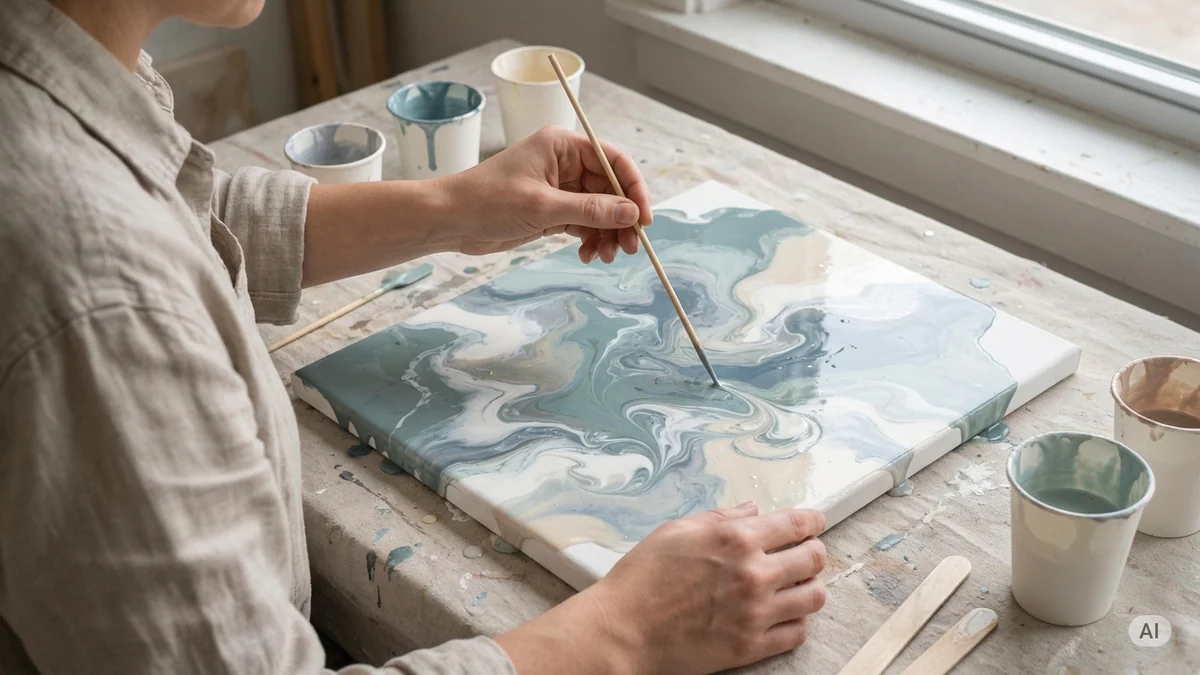
Not every epoxy suits alcohol ink. Resin choice affects how long the ink stays workable and how the final color looks. Most of the guidance points toward a slow-cure, clear epoxy made for art and casting.
Resinartbasics describes slow-cure epoxy with an 8 to 12 hour pot life as giving a generous window to place and move ink. It describes tabletop epoxy with about a 30-minute pot life as too fast, because it can harden before the design is finished. Deep pour resin can be too thin, letting the ink sink quickly. For a broader comparison of resin families, see epoxy vs polyurethane.
Resin Obsession warns that Amazing White casting resin makes alcohol-ink colors darken over several days. It recommends a liquid transparent dye made for that resin type instead of alcohol ink.
| Resin type | Fit with alcohol ink | What the sources say |
|---|---|---|
| Slow-cure clear epoxy (8 to 12 hour pot life) | Good window for placing and moving ink | Resinartbasics recommends this range for ink work |
| Tabletop epoxy (about 30-minute pot life) | Often too fast | Resin can harden before the pattern is finished |
| Deep pour casting resin | Can be too thin | Ink may sink quickly and muddy the bottom |
| Amazing White casting resin | Colors may darken over days | Resin Obsession suggests a transparent dye made for that resin |
Tip: Check the pot life printed on your resin label before you start. Your resin’s instructions always override general ranges.
Mixing Alcohol Ink into Epoxy Resin Step by Step
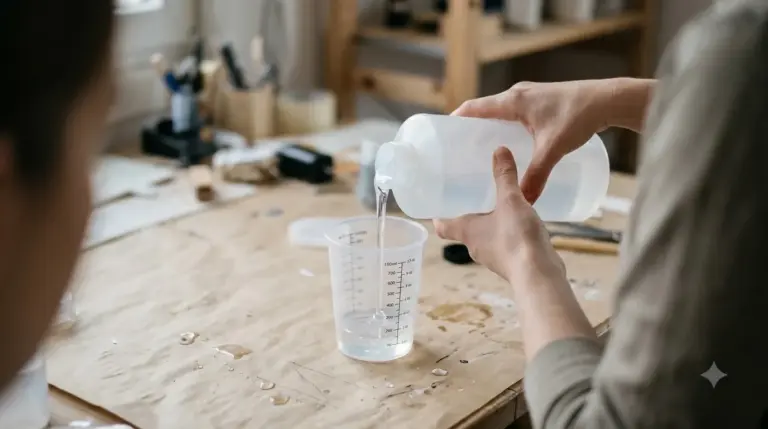
Mixing ink into resin is a straightforward process when you keep the resin ratio intact. Add colorant only after the base resin and hardener are measured and combined. Adding ink to either part alone can throw off the 1:1 mixing ratio that ArtResin describes.
Follow these steps for a clean, even tint. Work in a ventilated area and wear gloves from the start.
- Measure the resin and hardener. Use the ratio on your product label. ArtResin describes a 1:1 mix for its product.
- Stir for about 3 minutes. Hirosart recommends this time, scraping the sides and bottom of the cup.
- Check the viscosity. The mix should look honey-like, according to Hirosart.
- Transfer to a clean cup and stir again. Resinartbasics suggests this second transfer to catch unmixed residue from the bottom of the first cup.
- Add the ink in small amounts. Start with one or two drops, then stir until the color is even.
- Let the mix rest briefly. ArtResin notes that letting tinted resin sit about 15 minutes can slightly thicken it, which helps colors stay separate in flow work.
- Pour slowly from one corner. This helps reduce trapped air, according to Hirosart.
Ink-to-Resin Ratios for Vibrant Color
The safe upper limit for colorant is the most useful number here. ArtResin says not to exceed 6% of the total combined volume of resin and hardener. The sources describe alcohol ink as strong, so a small amount usually goes a long way.
Use the table below to convert the 6% limit into practical amounts. The math is simple arithmetic from the stated limit.
| Total resin plus hardener | Maximum colorant at 6% |
|---|---|
| 50 ml | 3 ml |
| 100 ml | 6 ml |
| 200 ml | 12 ml |
Resinartbasics states that alcohol inks can inhibit epoxy curing when used in significant amounts, citing an 8 percent inhibition threshold. That figure is higher than ArtResin’s 6% guideline, so staying under 6% gives you a margin. If you want more color, add it in small steps and test the saturation first. ArtResin suggests bringing a little colorant up the side of a mixing cup to judge it. For the next step after this check, see How to Mix Glitter Into Resin.
For homemade alcohol ink, Hirosart describes a 1:2 ratio of isopropanol to printer ink. Hirosart presents this as a recipe for the homemade ink itself, so it does not change the 6% limit for the finished resin. How to Mix Epoxy Without Bubbles explains a closely connected part of this problem.
Why Alcohol Ink Can Cause Cloudiness or Cells
Cloudiness and cells usually come from how the ink and resin interact, not from bad luck. The solvent in the ink is the main driver. ArtResin says alcohol breaks down resin, and that action creates the tendrils and squiggles seen in petri dish art.
Several common problems come from the same chemistry or from mixing errors:
- Cells and tendrils are the intended petri effect when alcohol ink is dropped onto wet resin.
- Cloudiness or specks often come from incomplete mixing or from pressed powders and grainy colorants that do not dissolve.
- Disappearing colors happen with some pink and red shades, according to Resin Obsession, which advises using inks made for epoxy.
- Soft or bendy cure happens when there is too much ink, according to Resin Obsession.
Resin Obsession recommends ICE resin tints and Jacquard white Pinata alcohol ink for consistent results in epoxy. It says the ICE tints are formulated to color resin and will not fade or change color. Its petri technique adds colored and white ink in turns, and the more ink you add, the less clear epoxy remains in the casting. For a step-by-step look at the drip method, read Resin Obsession’s guide to using alcohol ink in epoxy.
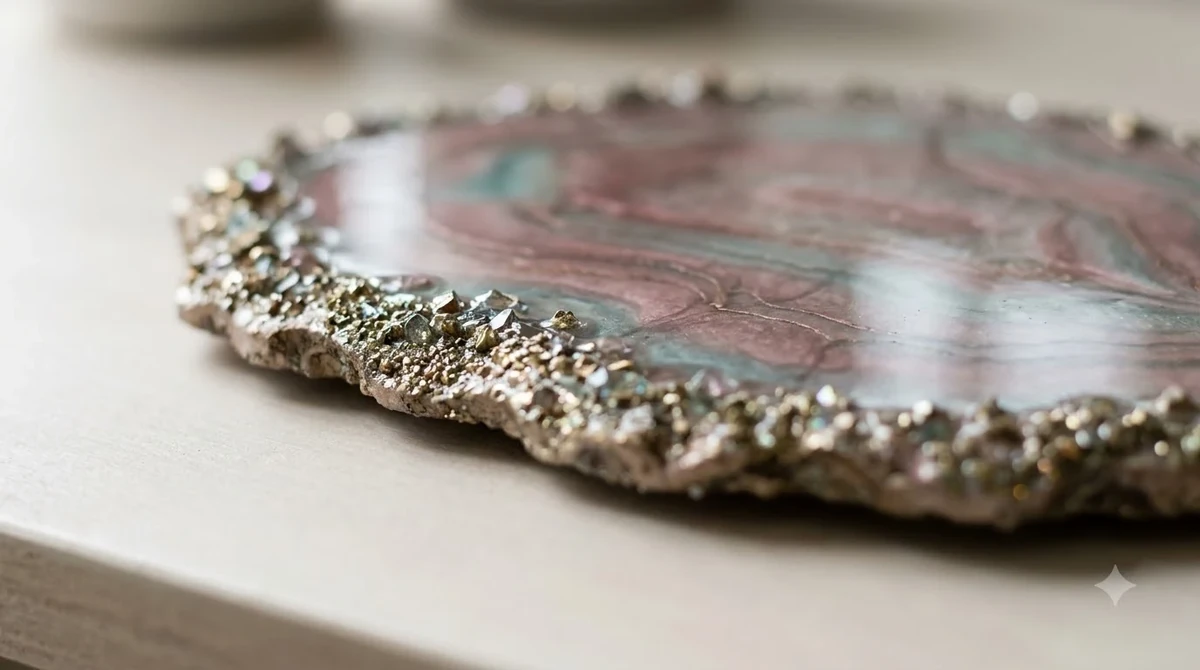
Tip: Hirosart describes a layering method that alternates base color and white ink in a few levels, which keeps the design from turning muddy when you add more colors.
Curing Time and Troubleshooting Color Problems
Color problems and curing problems often share a cause, so diagnose both together. Start by checking the ink amount, then look at timing and heat. Most symptoms trace back to too much ink, an unmixed batch, or a color that does not suit the resin.
The table below links common symptoms to likely causes and fixes, based on the sources above.
| Symptom | Likely cause | What to do |
|---|---|---|
| Sticky or soft surface | Too much alcohol ink | Stay under the 6% limit next time; the damage may not be fixable |
| Colors disappear or shift | Ink not made for epoxy, especially pink or red | Use inks made for epoxy, such as the ones Resin Obsession names |
| Colors darken over days | Certain casting resins, such as Amazing White | Use a dye made for that resin type |
| Grainy or specked look | Incomplete mixing or undissolved powders | Mix longer and use a two-cup transfer |
| Colors blur into mud | Pouring tinted resin before it thickens | Let tinted resin rest about 15 minutes before pouring |
Cure times vary by product, so follow the label for the working and cure window. Resinartbasics suggests that a clear base layer sitting about 20 to 30 minutes until honey-like can hold ink in place. The sources disagree on heat tools, and that conflict matters for safety (see the next section).
Safety Gear and Ventilation Tips
Safety gear matters most when you combine epoxy and alcohol-based ink. Both are chemical products with fumes and skin contact risks. Read the safety data sheet for your resin and ink before you start, and follow its guidance.
Hirosart recommends safety glasses, a VOC respirator or well-fitted mask, nitrile gloves, and a long-sleeved shirt or apron. Resinartbasics recommends nitrile gloves rather than latex, a NIOSH-approved respirator with organic vapor cartridges, and a ventilated workspace. Work in a room with good airflow, and keep the lid on ink bottles when you are not using them.
Heat tools need extra care. ArtResin says never use a flame torch on resin that contains alcohol ink, because the ink is flammable once added. Resin Obsession suggests a heat gun instead of a torch for alcohol ink resin, while Resinartbasics recommends a butane torch and warns that heat guns can blow ink around. Because the advice conflicts, check your resin and ink labels and the safety data sheet before using any heat tool.
Safety: Wear nitrile gloves and eye protection, work in a ventilated area, and keep flames away from resin that contains alcohol ink. Follow the safety data sheet for your specific products.
Frequently Asked Questions
Can you mix alcohol ink into resin without it ruining the cure?
Yes, if you keep the colorant within the limit. ArtResin says to stay under 6% of total resin and hardener volume, and it warns that more can stop proper curing. Resin Obsession adds that too much ink can make the cure soft or bendy.
Which alcohol inks work best in epoxy resin?
Resin Obsession recommends ICE resin tints and Jacquard white Pinata alcohol ink for consistent epoxy results. It says pink and red shades are the most likely to change or disappear, so inks made for epoxy are the safer choice.
Is alcohol ink in resin flammable and safe to torch?
Alcohol ink is flammable once it is in the resin, according to ArtResin, which says never to use a flame torch on that mix. Sources disagree on heat tools, so check the safety data sheet for your products before choosing a heat gun or torch.
Can resin with alcohol ink be used for food contact surfaces?
ArtResin says adding alcohol ink compromises its non-toxicity and food safety compliance. For a food contact surface, it recommends pouring a final top coat of clear, untinted resin. Confirm any food use against the manufacturer’s documentation for your specific product.
Alcohol ink can give rich color and petri-style patterns when you respect the limits. Keep colorant under 6%, choose resins and inks made for epoxy, and wear proper protection. For the basics of measuring and mixing, read how to mix epoxy resin first, or browse the Resin Basics & Q&A section.
More in Resin Basics & Q&A
 What Is Vacuum Degassing for Epoxy Resin and How It Removes Trapped BubblesUpdated Nov 26, 2026
 Epoxy Full Cure Time: How Long Before Your Project Is Ready to UseUpdated Nov 26, 2026
 Envirotex Lite Pour On Instructions for a Glossy, Bubble-Free FinishUpdated Nov 26, 2026
 Deep Pour vs Table Top Epoxy: Which Fits Your Project Depth and Cure TimeUpdated Nov 26, 2026
 High Temperature Epoxy for Metal: How to Pick One That Holds Up to HeatUpdated Nov 26, 2026
 Amazing Clear Cast Resin Instructions: Mix, Pour and Cure Without BubblesUpdated Nov 26, 2026