

We may earn a commission when you buy through links on this page, at no extra cost to you. Learn more.
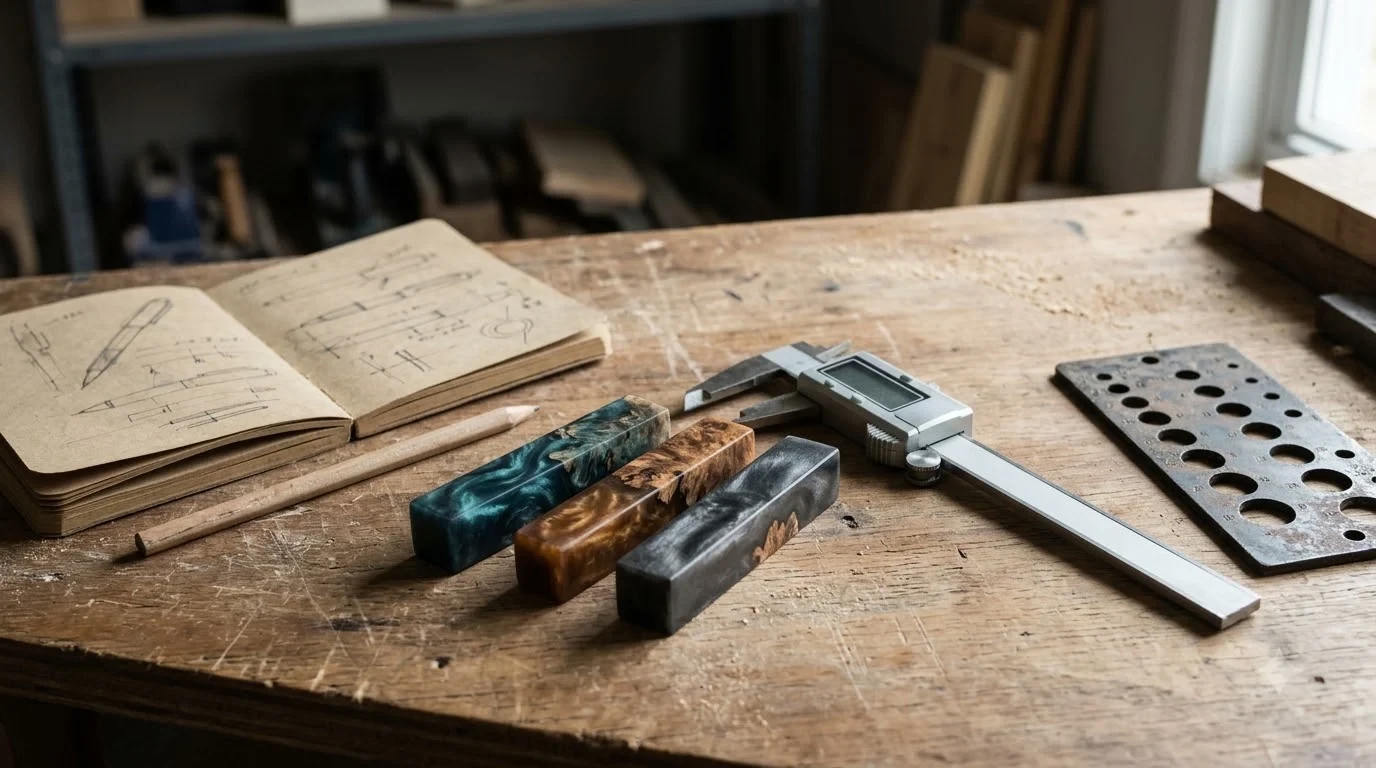
What are pen blanks used for? They are mainly turned into handmade pens on a wood lathe. A pen blank is a small, prepared piece of wood, acrylic or cast resin, often sized 3/4-inch square by 5-inch long. Exotic Wood Zone says its pen blanks are dimensioned to standard pen kit specifications. The same small pieces can also become stylus pens, keyrings, light pulls and other compact turning projects.
If you are new to pen turning, or you just noticed a bundle of blanks in a catalog, the question is worth answering before you buy. This guide explains what pen blanks are, which projects they suit, and how resin-based blanks let makers create custom colors from epoxy. It also covers the material choices and safety gear that matter most.
What Pen Blanks Are
A pen blank is a small, prepared piece of material sized for turning into a finished pen. It is the raw stock you mount on the lathe, not the finished writing instrument. Most blanks are shaped to fit standard pen kits, which keeps the mandrel and hardware matched.
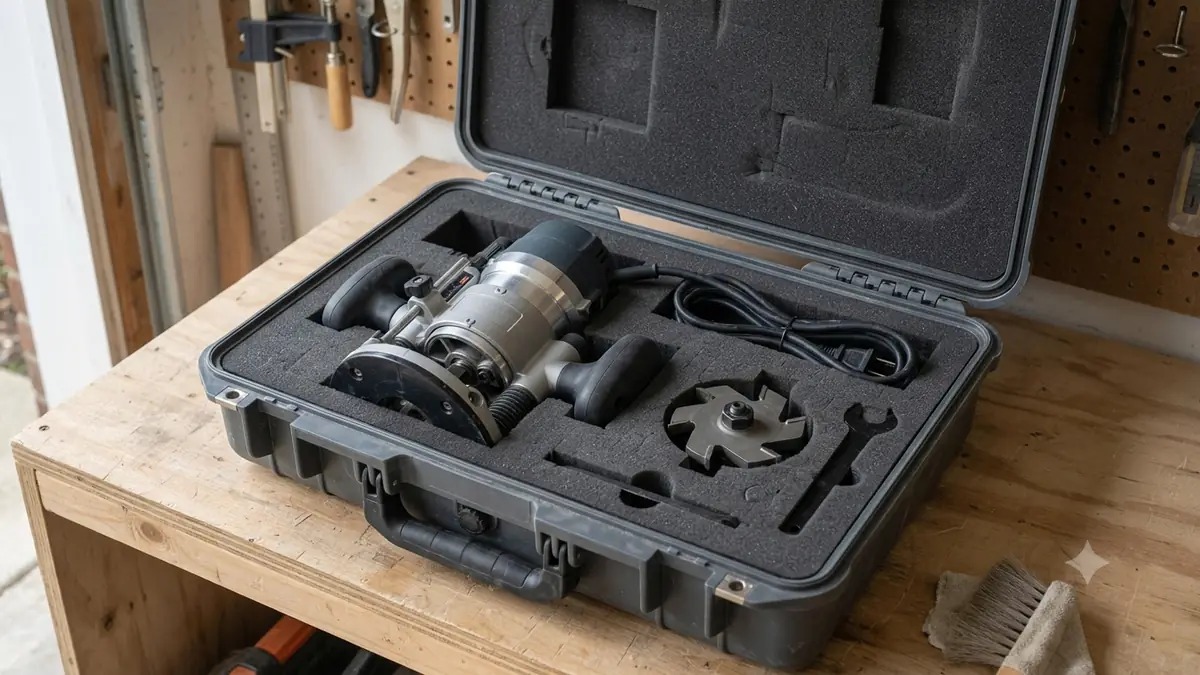
Woodturners Catalog describes pen blanks as prepared pieces, typically wood or acrylic, used to make single-piece and two-piece pens on the wood lathe. The Turners Workshop, a UK retailer, adds that blanks can also be made from synthetic stone and other materials. Exotic Wood Zone, which ships from St. Louis, describes its wood stock as typically 3/4-inch square by 5-inch long, as explained on its pen blank collection page.
In many wood pens, the blank is the finished surface. Exotic Wood Zone notes that there is no secondary finish hiding the wood beneath, so grain, figure and color stay visible on the final pen. That is why blank selection shapes the whole project.
Common Uses for Pen Blanks
Pens are the main use, but the same stock suits several other small turnings. Most of these projects use the same dimensions and the same basic lathe setup. Check the size of each project against the blank before you start.
- Stylus pens: Stylus kits use the same 3/4-inch blank size as pen kits, according to Exotic Wood Zone.
- Keyrings and light pulls: David Condon Woodcraft says its blanks also work for keyrings, light pulls and small handles.
- Slim stoppers: A 3/4-inch blank suits slim stoppers for oil cruets or small vials.
- Jewelry and small knobs: Pendants, beads and compact knobs fit within the square stock.
- Tool handles and spinning tops: Awls, scribes and small tops are compact turnings that suit short stock.
Woodturners Catalog also lists keychains, toothpick holders, seam ripper kits and crochet hooks as suitable projects. Plan your design around the stock you have. Exotic Wood Zone warns that a 3/4-inch square blank cannot produce a full-size wide knob or a full-size stopper.
Wood, Acrylic and Resin Pen Blanks Compared
Pen blanks come in a few broad families: hardwood, acrylic, stabilized wood and cast or stone-bound resin. Each one turns, drills and finishes differently, so the type you choose changes the work in the shop.
| Blank type | What the sources say | Practical point |
|---|---|---|
| Hardwood | Exotic Wood Zone lists Hard Maple and East Indian Rosewood as good beginner woods; Gaboon Ebony is denser | Denser species need sharper tools |
| Acrylic | Woodturners Catalog says acrylic is often easier to turn and finish than many hardwoods | Carbide tools are less aggressive and leave a better surface |
| Stabilized wood | Woodturners Catalog says stabilized blanks resist water, oils and solvents and do not move with the wood | Often needed for spalted wood with soft, decayed areas |
| Stone-bound resin | Woodturners Catalog describes Tru-Stone blanks as very hard | Expect slow drilling and turning |
For a beginner, hardwood is a practical starting point. Exotic Wood Zone lists Hard Maple and East Indian Rosewood as good beginner woods, and it notes that Gaboon Ebony needs sharper tools. Woodturners Catalog explains on its pen blanks page that acrylic and cast resin offer colors that natural wood does not.
Acrylic is not better overall. David Condon Woodcraft says acrylic suits bright colors and patterns, while hardwood suits a more traditional look with natural grain. David Condon also notes that its hardwood stock changes over time and that some hardwood blanks are out of stock, so check availability before planning a project.
Making Your Own Resin Pen Blanks
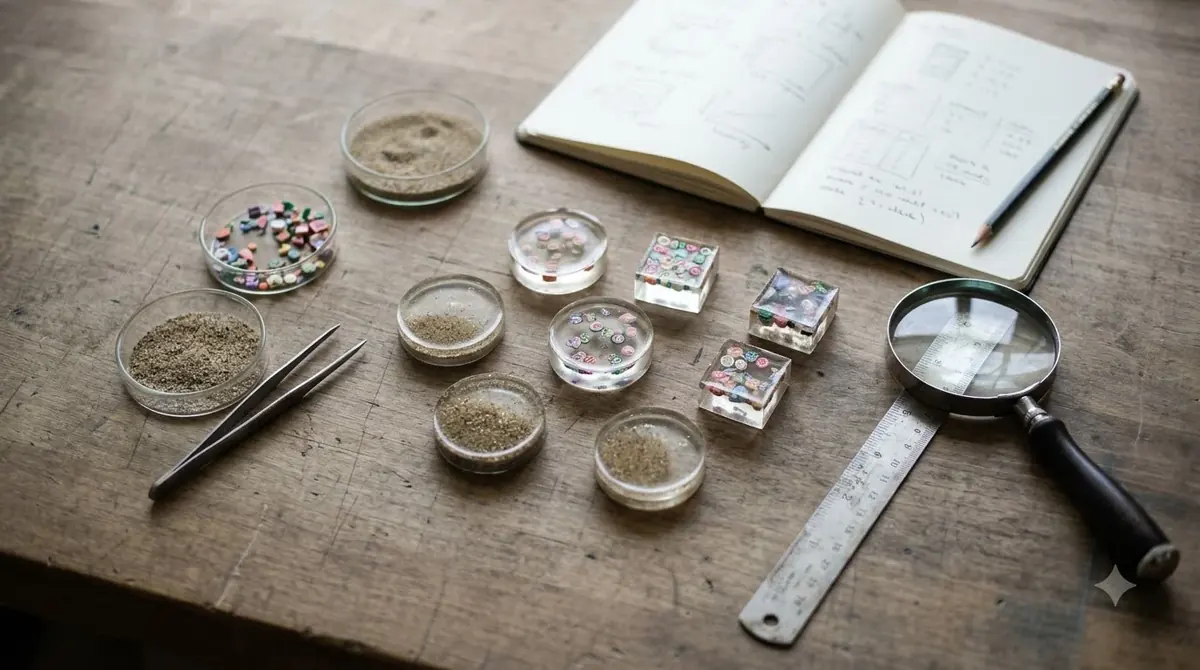
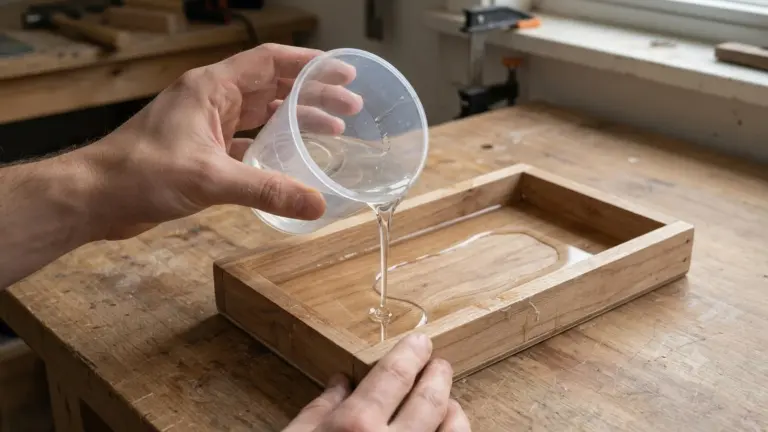
Makers can pour casting resin into a mold, add pigments or inclusions, and cut the cured block into blanks. This is how custom colored blanks are made from epoxy. Woodturners Catalog describes resin blanks with real dried flowers cast in clear resin, which shows the range of looks casting allows.
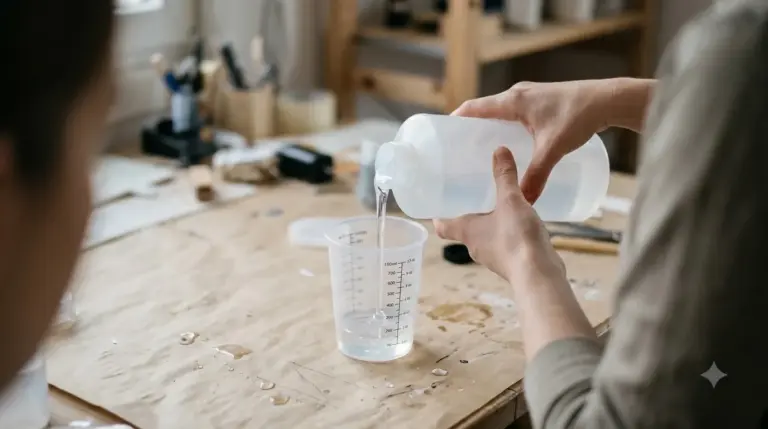
Start with a mold that matches the blank size you need. Mix the resin exactly as the manufacturer’s data sheet describes, using the stated mix ratio, and do not estimate by eye. Let the casting cure fully before you cut or turn it. If you are unsure how the two chemistries differ, read epoxy vs polyurethane before you buy.
Once the block is cured, drilling is the next step. Woodturners Catalog recommends drilling on the wood lathe, holding the blank in a self-centering chuck with pen drilling jaws and advancing the bit with a tailstock key chuck. This method keeps the hole centered across wood, acrylic and resin.
Choosing the Right Epoxy for Pen Blanks
Choose a casting resin or tabletop epoxy that suits the thickness of your pour. Read the data sheet for the pour depth, mix ratio and pot life before you open the container. Those numbers come from the manufacturer and they govern the result.
Cure time is the step people rush most often. Do not turn or drill a casting until the manufacturer’s cure window has passed. For a fuller explanation, see how long does epoxy take to cure, which covers what affects the timing.
Tip: Exotic Wood Zone advises buying an extra 10-20% of material beyond the project need to allow for drilling, sanding and catching. The same margin makes sense when you pour a resin block that may need trimming.
Safety Gear for Turning and Casting
Wear a respirator and use dust extraction when you turn dusty woods. Exotic Wood Zone warns that rosewood and cocobolo dust can cause skin and respiratory irritation. Keep the lathe area ventilated and clean the bench after each session.
Handle resin with nitrile gloves and work in a ventilated space. Read the product SDS before you open a container and follow its guidance on handling and storage. Sharp tools also reduce strain. David Condon Woodcraft says acrylic blanks need sharp tools and careful sanding.
Safety: Check the SDS for each resin and wood you use, wear nitrile gloves, and keep the workspace ventilated. Use a respirator when dust is present.
Frequently Asked Questions
What size are pen blanks?
Exotic Wood Zone lists a bundle of blanks sized 3/4-inch by 3/4-inch by 6-inch. Single blanks are typically 3/4-inch square by 5-inch long. Check the listing for the exact size of the item you choose.
Can you make things other than pens from pen blanks?
Yes. Exotic Wood Zone lists hair sticks and hair pins as projects, using a 5-inch blank with a tapered shaft. Small tool handles, jewelry and spinning tops also suit the stock. Plan the design around the blank size.
Do I need special tools to turn pen blanks?
For most non-pen projects, Exotic Wood Zone says you need a lathe, sharp gouges and skews, and basic sanding supplies. Stylus pens are the exception, because they need a matching kit. Carbide tools suit acrylic blanks better, according to Woodturners Catalog.
Are pen blanks compatible with standard pen kits?
Exotic Wood Zone says its blanks are dimensioned to standard 3/4-inch square pen kit specifications. It says they fit slimline, cigar and bolt-action mandrel systems. Confirm the kit size before you buy, because some kits need a different blank.
Pen blanks are versatile stock, and the right choice depends on your project and skill level. Start with a standard-size blank, plan your design around its dimensions, and follow the safety steps for dust and resin. For more on how casting resin behaves, see Resin Basics & Q&A.
More in Resin Basics & Q&A
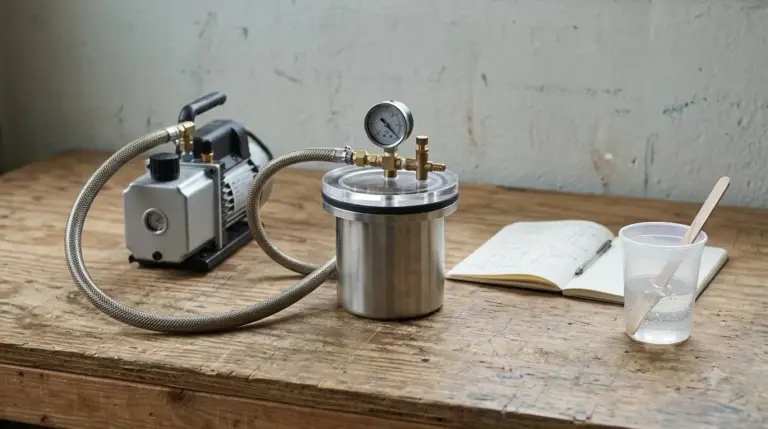 What Is Vacuum Degassing for Epoxy Resin and How It Removes Trapped BubblesUpdated Nov 26, 2026
 Epoxy Full Cure Time: How Long Before Your Project Is Ready to UseUpdated Nov 26, 2026
 Envirotex Lite Pour On Instructions for a Glossy, Bubble-Free FinishUpdated Nov 26, 2026
 Deep Pour vs Table Top Epoxy: Which Fits Your Project Depth and Cure TimeUpdated Nov 26, 2026
 High Temperature Epoxy for Metal: How to Pick One That Holds Up to HeatUpdated Nov 26, 2026
 Amazing Clear Cast Resin Instructions: Mix, Pour and Cure Without BubblesUpdated Nov 26, 2026