

We may earn a commission when you buy through links on this page, at no extra cost to you. Learn more.
Is epoxy food safe? Yes, but only in the fully cured state and only for the uses the product label allows. Sources describe liquid epoxy as toxic before it cures, so it should never touch food or drink. Several sources say a cured, FDA compliant clear epoxy is inert when used as directed. WiseBond recommends a full cure of 30 days before treating epoxy as an inert plastic, and advises against cutting or preparing raw food on it.
This guide explains what food safe epoxy really means, how FDA references fit in, and where cured epoxy fits in a kitchen. It also covers the mistakes that make a finished piece unsafe, so you can decide what to make and what to leave to a different material.
What Food Safe Epoxy Actually Means
Food safe epoxy is a cured product that does not leach chemicals, taste, or smell into food under the conditions it was tested for. The phrase is not a legal definition that applies everywhere. Hirosarts food-contact guide summarizes the FDA food conformity idea as epoxy that is inert once fully cured and used as directed.
Food safe also does not mean edible or suitable for every food use. Acrylic Painting School says fully cured epoxy is food safe only for accidental and short contact, not extended contact. Resin-expert.com makes a similar point, noting that cured commercial epoxy is generally food-safe for brief contact.
Keep the liquid and cured states separate in your head. Hirosarts, Resin-expert.com and WiseBond all say liquid epoxy is toxic and should never be used with food or drink. Skin contact with liquid resin should be avoided as well.
Is Resin Food Safe, Including UV Resin?
Resin is a broad term, and the answer depends on the chemistry and whether it has fully cured. Epoxy is one type of resin. Polyurethane and UV resin are other types that makers often compare with epoxy. Sources in this group discuss epoxy specifically, so do not assume a label for one type applies to another.
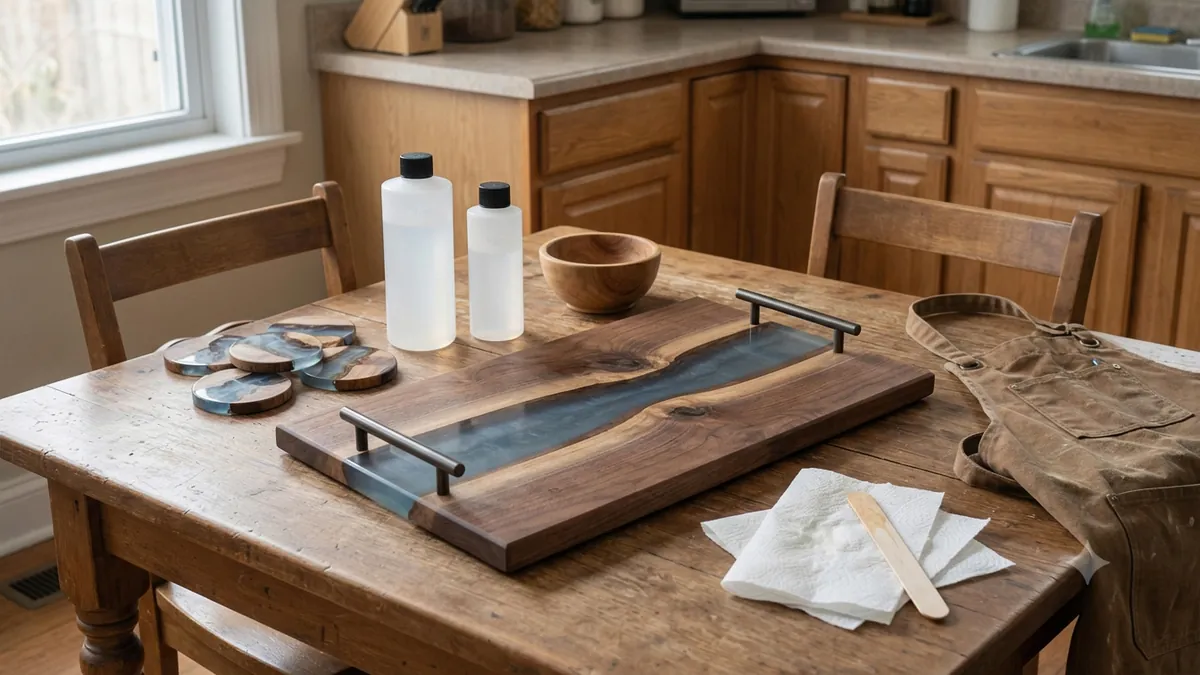
Some sources list shellac, polyurethane and water-based finishes as alternatives for food-contact surfaces such as tumblers. Hirosarts names shellac and CrystaLac as examples. Read the manufacturer’s data sheet for any product before you assume it is food safe.
UV resin is cured with ultraviolet light rather than a two-part hardener. No source in this set gives a food-safety finding for UV resin specifically, so you should check the manufacturer’s documentation and SDS. If the documentation does not mention food contact, treat the piece as decorative only.
FDA Compliant Epoxy: What to Look For
FDA compliant epoxy means the manufacturer says its product meets FDA food-contact rules, usually 21 CFR 175.300 for resinous and polymeric coatings. Source 5 says products listing this code are the ones intended for surfaces in contact with food. Look for the code in the product description or data sheet, not just the word “food safe” on the front of the bottle.
WiseBond describes independent lab testing against 21 CFR 175.300 Condition E for its clear Deep Pour and Bar and Table Top epoxies. The same source warns that adding colorant changes the formula, so the tested result applies to clear epoxy only. Pigments are a real concern. Hirosarts lists Titanium Dioxide, Copper phthalocyanine and Chromium Oxide Green as pigments that may release harmful chemicals into food from contact surfaces.
Check the BPA disclosure too. Acrylic Painting School says BPA entered epoxy production around 1960 and that about 60% of resin products still contain it. WiseBond cites CDC data finding detectable BPA in 93% of 2517 urine samples from people six years and older. Sources say the FDA considers low levels safe, but the review is ongoing. If you want the lowest exposure, look for a product that states its BPA content. You can read more on the food safe epoxy options covered elsewhere on this site.
Be careful with manufacturer claims. Resin-expert.com notes that some manufacturers stopped retesting after a uniform EU standard was adopted, because the test seal is expensive. A brand’s “food safe” wording does not always mean current independent testing. Ask the manufacturer for its test documentation if it is not on the data sheet.
Food Safe Epoxy for Cutting Boards
A cutting board is the hardest use case for any epoxy. The surface is repeatedly cut, scrubbed and washed, which can open the coating. Acrylic Painting School says epoxy on a cutting board should be used with care, and that deep cuts are not good for resin. It also advises against heavy chopping or daily cutting on a resin board.
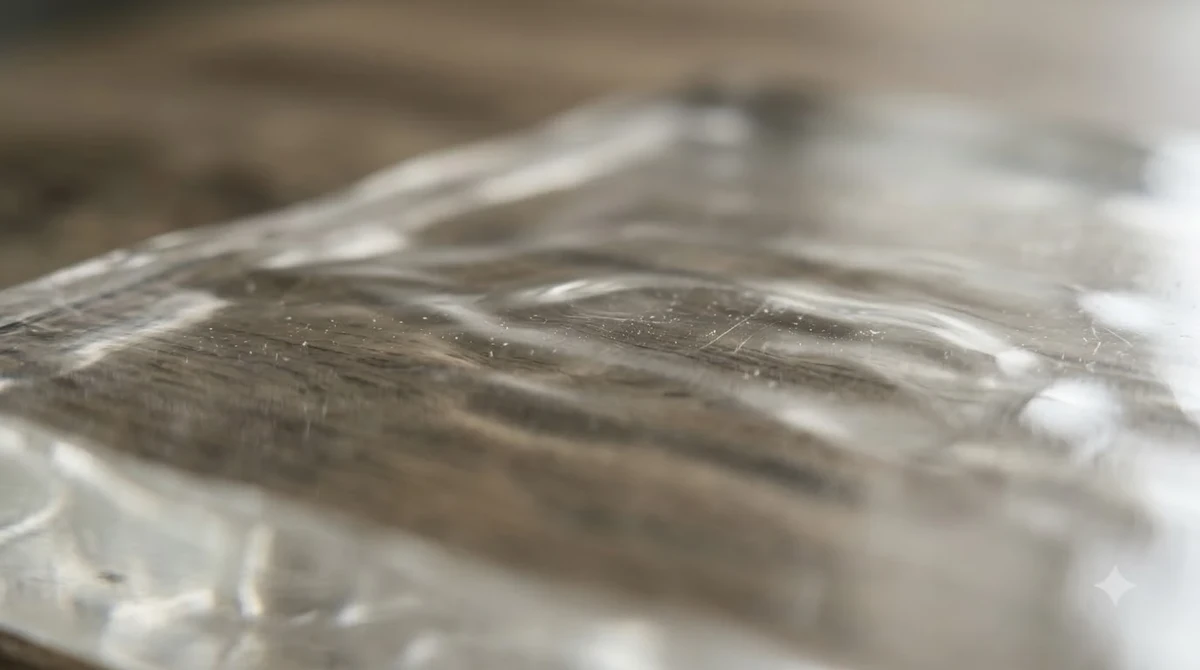
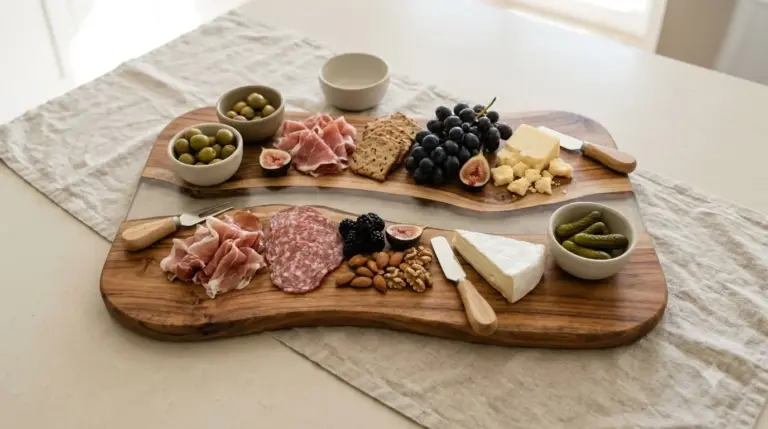
WiseBond advises not to cut on or prepare raw food on epoxy surfaces. Follow that guidance literally. A safer use is an epoxy-coated serving board, charcuterie tray or display piece where food is placed on the surface but not cut there.
Other handling rules matter too. Acrylic Painting School says to avoid placing hot pans or dishes on epoxy, avoid harsh scrubbing, and disinfect the surface after use. If you see deep knife marks, discoloration or a tacky patch, stop using the piece with food. Hirosarts also warns that alcohol can break down the bonds in epoxy over time, which can cause weakening, cracking or peeling.
Tip: Mark decorative-only pieces clearly so guests and family know which items are for display and which are for serving.
Curing Times and Mixing Ratios That Affect Safety
Curing is the step that decides whether epoxy is safe. Hirosarts says a resin that is not fully cured can contain harmful chemicals, and that incorrect mixing ratios can cause a sticky or soft finish that may contaminate food. Always follow the mixing ratio on the product label, because the two parts are formulated to react in that proportion.
WiseBond epoxy food safety blog recommends a full cure of 30 days before treating an epoxy surface as an inert plastic. Max Clear Grade Epoxy, which Resin-expert.com describes as a two-part system, has a 70-minute working time and takes at least 24 hours to set. A set time is not the same as a full cure, so do not start food contact based on the first day. ArtResin’s 8 oz kit uses a 1:1 mixing ratio, according to Woodworkingclarity, but check your own product’s instructions.
Temperature matters after cure. Hirosarts advises keeping cured epoxy below 165°F, because excessive heat can release harmful chemicals. Acrylic Painting School gives the same limit as 165°F (70°C) and recommends no microwaving and often no dishwashing. Hot food, hot drinks and hot dishes should not sit on the surface.
Safety: Wear nitrile gloves, eye protection and a respirator when handling resin or hardener, as Resin-expert.com advises. Work in a ventilated space and read the product SDS before you start.
For a more detailed look at safe handling, see Resin Safety basics on this site.
Common Mistakes That Make Epoxy Unsafe
Most unsafe results come from a short list of errors. The most common is serving food on a piece that has not fully cured. Rushing the cure is the second. Adding colorants, glitter or other decorations is the third, because sources say these can change the formula.
- Skipping the full cure. Wait for the time stated by the manufacturer, and treat the 30-day WiseBond figure as a conservative reference for clear epoxy.
- Adding unapproved colorants. WiseBond says its tested result covers clear epoxy only. Acrylic Painting School warns that glitter, dyes and inks can make epoxy unsafe for food.
- Using the wrong hardener. Acrylic Painting School says some hardeners contain amines, which it advises avoiding because amines can contaminate food.
- Exposing the surface to alcohol or harsh cleaners. Hirosarts warns about alcohol, and Acrylic Painting School advises avoiding strong cleaning chemicals.
- Using a non-approved ingredient. Woodworkingclarity says epichlorohydrin should not be present in food-grade epoxy in any amount.
Check the product SDS and data sheet before you buy. The Hirosarts guide and WiseBond blog both explain what to look for on a label. If a product has no food-contact documentation, use it for decorative pieces only.
Frequently Asked Questions
Is epoxy food safe once fully cured?
Sources say fully cured, FDA compliant clear epoxy is generally inert when used as directed. Acrylic Painting School limits this to accidental and short contact, not extended contact. Cure time and product type matter.
Is epoxy safe for cutting boards?
WiseBond advises against cutting on or preparing raw food on epoxy surfaces. A serving board where food is placed but not cut is a more suitable use. Deep cuts and scrubbing can damage the coating.
Can you put hot food or drinks on epoxy?
Hot items should be kept away from epoxy. Hirosarts advises not heating cured epoxy beyond 165°F, and Acrylic Painting School says no microwaving and often no dishwashing. Use a trivet or plate for hot dishes.
What does FDA compliant epoxy resin mean?
It means the manufacturer states the product meets FDA food-contact rules, commonly 21 CFR 175.300. Look for that code in the data sheet, and check whether the testing covers clear epoxy only.
Cured, FDA compliant clear epoxy can be a reasonable choice for many food-adjacent projects, but it is not a universal material. Check the data sheet, follow the cure time, and keep hot food and knives off the surface. When in doubt, ask the manufacturer for its food-contact documentation before you serve anything on it.
More in Resin Safety
 Is There a Food Safe Epoxy? Yes, but Only When Fully CuredUpdated Nov 26, 2026
 How to Get Rid of Epoxy Smell: Fixes That Actually Reduce OdorUpdated Nov 26, 2026
 Can You Put Food in Resin? Safer Choices and How to Prevent RotUpdated Nov 26, 2026
 Do You Need a Respirator for Resin? When Ventilation Is Enough and When It Isn’tUpdated Nov 26, 2026
 Food Coloring in Resin: Results, Fading and Safer AlternativesUpdated Nov 26, 2026
 Is EcoPoxy Food Safe? What Makers Should Verify Before UseUpdated Nov 26, 2026