

We may earn a commission when you buy through links on this page, at no extra cost to you. Learn more.
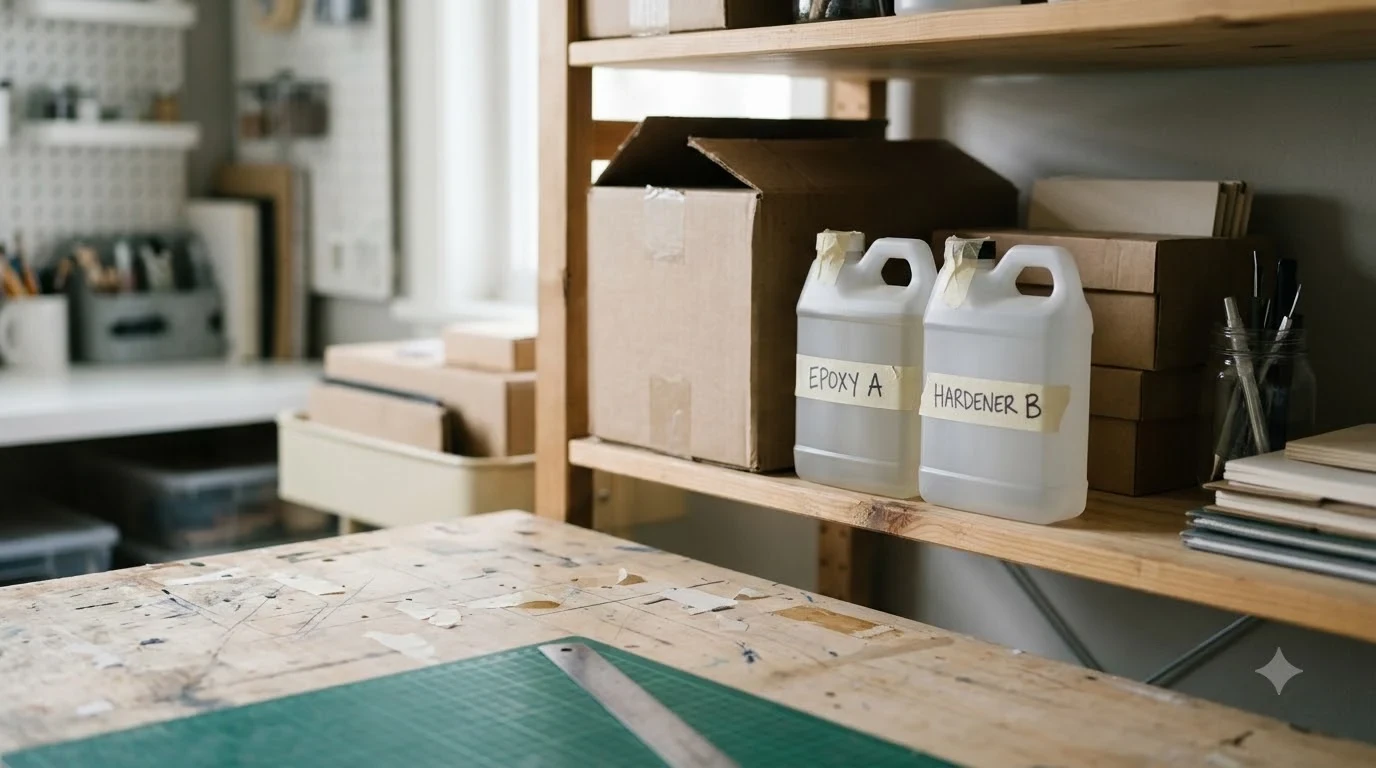
Epoxy shelf life is usually measured in years when resin and hardener stay sealed at room temperature. WEST SYSTEM and PRO-SET both list minimum shelf lives of three years for resin and two years for hardener. These are minimums tied to retained samples, not sudden expiration dates. Keep containers closed, store above 50°F (10°C) where possible, and run a small pot life test if the material is older than the minimum.
This guide explains how long epoxy and UV resin stay usable, what changes as they age, and how to check whether an older batch still cures properly. The short version is that age matters less than storage and contamination. The details below will help you decide whether to use a can you found in the back of the garage.
What Is Epoxy Shelf Life?
Epoxy shelf life is the time a resin or hardener can sit unused and still perform as designed. According to WEST SYSTEM, the clock starts when the material is manufactured, not when you open it.
Manufacturers usually describe shelf life in two ways. One is a labeled or minimum shelf life, which is a conservative window. The other is the longer period in which the product often remains usable in practice. WEST SYSTEM says its resins and hardeners do not have a strict shelf life and that the actual shelf life is typically far longer than the minimum.
Shelf life and pot life are different. Shelf life is how long the unmixed components keep their performance. Pot life is how long the mixed material stays workable once you combine resin and hardener. If you want to understand the mixed side of the clock, see our guide on how long does epoxy take to cure.
Does Epoxy Expire?
Epoxy does not have a printed expiration date that automatically makes it unusable. WEST SYSTEM states that it does not put an expiration date on its product containers. Instead, it sometimes lists a minimum shelf life based on how long it keeps retained samples from each batch.
The manufacturer figures are useful to compare. Use this table as a starting point, then check the technical data sheet for your exact product.
| Item | Figure given by the manufacturer | Source |
|---|---|---|
| WEST SYSTEM 105 resin and hardeners, labeled shelf life | Two years when stored at room temperature in closed containers | WEST SYSTEM instruction page |
| Minimum shelf life, resin | Three years after manufacture | Epoxyworks article quoting WEST SYSTEM |
| Minimum shelf life, hardener | Two years after manufacture | Epoxyworks article quoting WEST SYSTEM |
| Critical structural work, resin | Less than three years past manufacture | Epoxyworks article quoting WEST SYSTEM |
| Critical structural work, hardener | Less than two years past manufacture | Epoxyworks article quoting WEST SYSTEM |
| PRO-SET standard infusion and laminating epoxies | Three years for resins and two years for hardeners | PRO-SET Epoxy Basics |
Notice the gap between the minimum and the real-world life. WEST SYSTEM says it has tested epoxy over 10 years old that cured without issues. That does not mean every can will behave the same way. It means age alone is not a reliable reason to throw material away.
For general projects like a small river table, a coaster set or a craft piece, older material often works after a test. For critical structural work, the manufacturer advises using fresher product. The age limits in the table are the guardrails to follow. For the lot-level details behind those limits, the Epoxyworks article on WEST SYSTEM shelf life explains how the retained samples set the minimum.
Does UV Resin Expire?
UV resin also has a limited working life, but the sources I was given do not include shelf life numbers for UV-cure products. Check the manufacturer’s label or technical data sheet for the printed date and storage instructions. Do not assume epoxy numbers apply to UV resin.
In general, UV resin is more sensitive to light exposure than to age alone. Keep it in its original opaque bottle, closed tightly, and away from direct sunlight and bright work lights. Light can start curing the resin before you are ready. If a bottle has thickened or cures slowly under your lamp, treat it as a sign of aging or exposure and test a small amount before a larger pour.
UV and two-part epoxy are different chemistries. Their storage and test steps differ. The pot life test described later applies to two-part epoxy, not to UV resin.
How to Store Epoxy Resin
Good storage is the single biggest factor you control. Keep resin and hardener sealed, at a steady room temperature, and away from moisture and dirt. Manufacturers tie most long-term problems to temperature swings, air exposure and contamination.
WEST SYSTEM says the ideal storage temperature for resin is above 50°F (10°C), and that resin can withstand storage at 100°F (37°C) without a problem. PRO-SET recommends room temperature between 65°F and 85°F (18°C to 29°C) in sealed containers until shortly before use.
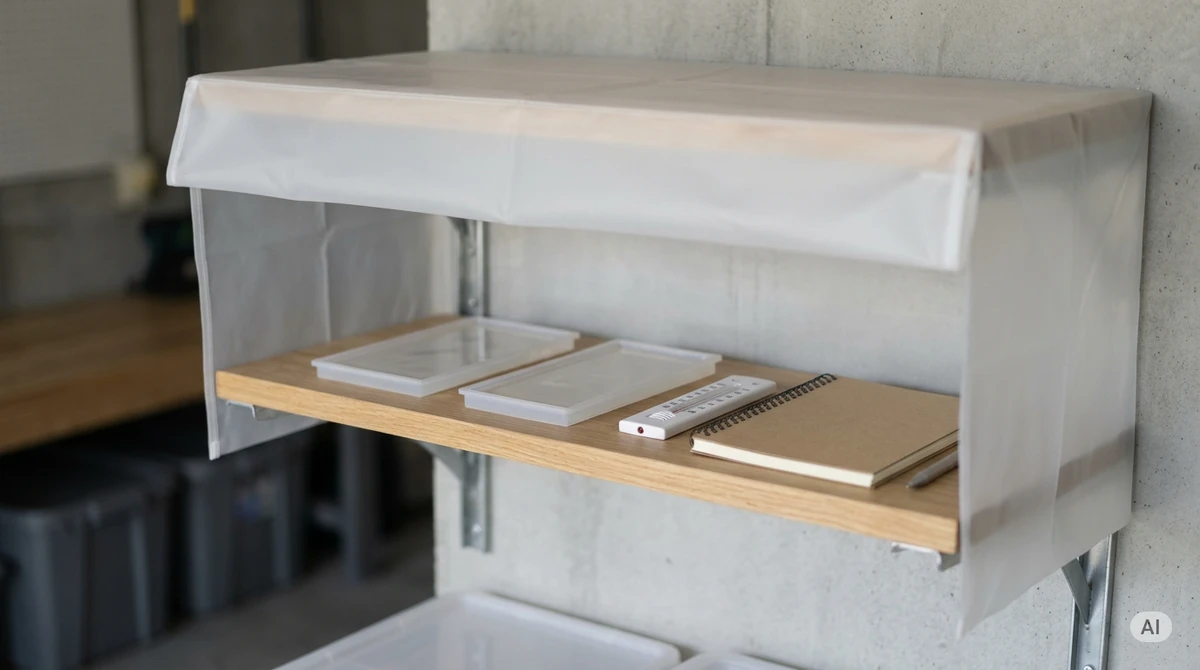
- Seal the containers after every use. Replace caps fully, and keep hardener pump reservoirs covered until you are ready to work.
- Keep the area dry. Store cans on a shelf rather than a damp basement floor, since WEST SYSTEM notes that a damp surface can corrode a container and contaminate its contents.
- Avoid cold spots. PRO-SET warns that temperatures below 55°F (12°C) may crystallize resin, especially near outside walls or on the floor.
- Limit temperature swings. Moving cans between a cold garage and a warm house can cause condensation inside the container.
- Label the date. Write the purchase or open date on the can, and decode the lot number if you need the manufacture date.
- Keep solvents and oils away. Contact with chemicals, oil, paint or solvents can permanently damage resin or hardener.
Tip: Use separate mixing sticks or syringes for resin and hardener. WEST SYSTEM warns that one stick used for both can produce chunks or stringy areas and often wastes both components.
Can You Use Expired Epoxy?
Often you can, but only after a test and only for suitable jobs. The manufacturers describe age-related changes that are mostly cosmetic or handling issues, not automatic failure. The bigger risks are contamination and loss of reactivity.
WEST SYSTEM says a 15-year-old 105 Epoxy resin mixed with a newer hardener cured as expected in its example. The same company recommends saving older material for non-critical applications where strength or clarity are not especially important. For critical structural work, use fresher product.
Several age-related changes are common. Resin can thicken, which makes metering and mixing harder. WEST SYSTEM says warming the resin lowers viscosity and makes it easier to handle, and that you should spend extra time mixing. Hardeners can darken. The 205 Fast Hardener and G/5 hardener may turn reddish-purple, which the company calls purely cosmetic. Moisture in an open hardener can act as an accelerator and make the epoxy foam during cure. If the material foams or the gel time is far off, discard it.
Safety: Wear nitrile gloves, work in a ventilated space, and review the product safety data sheet before handling old or unfamiliar material. Do not pour mixed epoxy in a thin plastic cup and leave it unattended, since PRO-SET warns that a plastic container of mixed epoxy can melt.
How to Tell If Epoxy Is Bad
Start with a visual and smell check, then run a pot life test. Most problems with older epoxy come from contamination or crystallization, not from the calendar. WEST SYSTEM says most problems with older epoxy are not related to age at all.
Here is a simple way to sort what you see. Use the technical data sheet for pot life values, since these are your reference point.
| What you see | Likely cause | What to do |
|---|---|---|
| Milky or cloudy resin | Crystallization, often after cold storage | Warm the can in a water bath and stir until clear |
| Chunks or stringy areas after mixing | Hardener and resin cross-contamination | Discard both; little can be recovered |
| Hardener turned reddish-purple | Age or contact with metal | Usually cosmetic; test before use on clear work |
| Foaming during cure | Moisture in an open hardener | Discard if the material foams |
| Thick, hard-to-pump resin | Increased viscosity with age or cold | Warm the resin and mix longer |
| Gel time far off the data sheet | Reduced reactivity or mix error | Check pump ratio, then retest or discard |
Check the pump ratio before you blame the material. PRO-SET says most curing problems trace back to inadequate mixing or an incorrect ratio. For a deeper look at ratio errors, the Resin Basics and Q&A section covers the fundamentals.
Frequently Asked Questions
How long does epoxy resin last unopened?
Standard WEST SYSTEM 105 resin and hardeners carry a labeled two-year shelf life when stored at room temperature in closed containers. Minimum shelf life is three years for resin and two years for hardener, based on retained samples. Real-world life is often longer, but a test is the only way to confirm a specific can.
How can I tell how old my WEST SYSTEM epoxy is from the lot number?
WEST SYSTEM lot numbers have seven digits followed by a letter. The first three digits identify the product, the fourth digit gives the year of manufacture, and the last three digits give the Julian date from 001 to 366. Compare the year digit with the current year, then use the labeled shelf life for your product.
Can I still use epoxy that is five or more years old?
It may work for non-critical projects if it passes a pot life test and shows no contamination. WEST SYSTEM says older material should be saved for less demanding uses where strength or clarity are not critical. For critical structural work, the company recommends resin under three years past manufacture and hardener under two years.
How do I run a pot life test on old epoxy?
Mix 100 grams of resin and hardener at the correct ratio in a 2-inch diameter container at about 72°F (22°C). Stir for exactly two minutes, then set the cup down and do not hold it. Check periodically by moving the stick until the epoxy no longer flows back into the groove. Compare that gel time with the technical data sheet, keeping in mind that a 10°C (18°F) rise can cut pot life roughly in half.
Epoxy shelf life depends more on sealed storage, steady temperature and clean handling than on the date alone. Check the lot number, run a small pot life test on anything older than the minimum, and keep fresh material for critical jobs. If you are weighing options, reading about epoxy vs polyurethane can help you choose the right system for your next project.
More in Resin Basics & Q&A
 What Is Vacuum Degassing for Epoxy Resin and How It Removes Trapped BubblesUpdated Nov 26, 2026
 Epoxy Full Cure Time: How Long Before Your Project Is Ready to UseUpdated Nov 26, 2026
 Envirotex Lite Pour On Instructions for a Glossy, Bubble-Free FinishUpdated Nov 26, 2026
 Deep Pour vs Table Top Epoxy: Which Fits Your Project Depth and Cure TimeUpdated Nov 26, 2026
 High Temperature Epoxy for Metal: How to Pick One That Holds Up to HeatUpdated Nov 26, 2026
 Amazing Clear Cast Resin Instructions: Mix, Pour and Cure Without BubblesUpdated Nov 26, 2026